


Table of Contents
- Why Social Skills Matter for Toddler Development
- Sharing Activities for Toddlers: Teaching Generosity and Turn-Taking
- Turn-Taking Games for Toddlers: Building Patience and Cooperation
- Empathy Activities for Toddlers: Recognizing Feelings and Kindness
- Toddler Playdate Activities: Structured Play for Social Confidence
- Communication and Conversation Skills Through Play
- Measuring Progress and Setting Realistic Expectations
- Frequently Asked Questions
Last Updated: October 17, 2026
Why Social Skills Matter for Toddler Development
Social skills shape how toddlers connect with others, manage emotions, and navigate the world. When toddlers practice activities to build social skills in toddlers, they learn to communicate, cooperate, and understand others' feelings, building confidence and resilience for years to come.
Ages 3 to 5 are critical for social development. During this window, toddlers begin recognizing emotions, learning to share and take turns, and understanding basic social rules. Without intentional practice, many struggle with frustration, conflict resolution, and peer interaction, challenges that can follow them into school.
Structured, playful activities can transform how toddlers approach social situations. Toddlers don't learn social skills through lectures, they learn through doing, and guided play turns sharing, cooperation, and empathy into habits.
Sharing Activities for Toddlers: Teaching Generosity and Turn-Taking
Sharing is one of the hardest social skills for toddlers to master. It requires delaying gratification, trusting a toy will come back, and recognizing that others have wants too. Sharing activities for toddlers work best when playful, low-pressure, and structured to prevent conflict.
Toy Rotation and Sharing Circles
Toy rotation reduces conflict while teaching sharing naturally. Rotate a smaller selection of toys every few days instead of keeping everything out at once, this keeps toddlers interested without overwhelming them and makes sharing feel less like loss.
A sharing circle is a guided activity where toddlers pass toys while you narrate. Start with two toddlers and one special toy: "Maya is playing with the blocks.
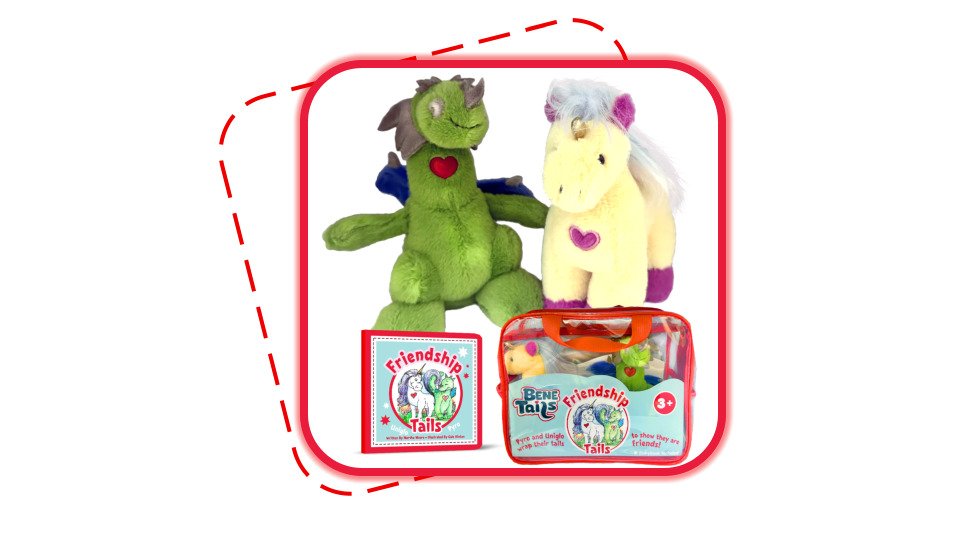
The Friendship Tails Kit: Pyro & Uniglo ($24.99) is designed specifically for this kind of structured sharing practice. The story teaches what friendship looks like, including taking turns and including others, and the magnetic tail connection gives toddlers a concrete way to celebrate when they've shared well.

What to Do When Sharing Causes Conflict
Conflict over toys is normal and an opportunity to teach. When two toddlers want the same toy, resist solving it immediately. Narrate what you see: "You both want the red truck. That's a hard feeling." This validates emotions without taking sides.
Offer a choice: "Do you want to take turns, or should we find another toy?" If they choose turns, set a timer for 3 minutes so both children know when the switch happens. This removes the argument about fairness and gives toddlers a sense of control.
If conflict escalates, separate the toys and redirect. Return to sharing practice when emotions are calm, consistency matters more than perfection, and toddlers need dozens of small experiences to internalize sharing.
Turn-Taking Games for Toddlers: Building Patience and Cooperation
Turn-taking games teach toddlers that waiting is temporary and their turn will come, building patience, cooperation, and rule-following.
Simple Games That Teach Waiting
Simon Says requires listening, watching, and waiting. Say, "Simon says, touch your nose," and do the action together. After a few rounds, try a move without saying "Simon says" first.
Musical chairs (adapted for toddlers) removes the elimination aspect that can upset younger children. Instead, when the music stops, everyone sits down together. The focus is on the fun of moving and stopping, not on winning or losing.
Pass the object is simple and effective: sit in a circle and pass a toy around while singing or playing music. When the music stops, whoever holds the toy gets to choose the next activity or song. This teaches turn-taking without competition.
The What Would You Do? Situational Card Game ($7.99) works well for toddlers aged 4 and up. Each card presents a social situation, and players choose the response that shows positive behavior.

Empathy Activities for Toddlers: Recognizing Feelings and Kindness
Empathy, recognizing and understanding others' feelings, doesn't come naturally to toddlers; it develops through guided practice and modeling (Rethinking empathy development in childhood and adolescence). Empathy activities for toddlers help them connect emotions to actions and see how their behavior affects others.
Emotion Recognition Through Play and Stories
Emotion charades teaches toddlers to recognize feelings through facial expressions and body language. Make an exaggerated sad face and ask, "How am I feeling?" Let your toddler copy it, then ask, "What could make me feel happy?" This links emotions to actions.
Story-based learning is powerful because toddlers see characters experiencing emotions and making choices. Read a picture book and pause to ask questions: "How do you think the character feels right now? Why?" The Bene Bear® Benefits The World Storybook ($6.99) specifically teaches kindness, empathy, and respect through a character's journey.
Emotion mirrors help toddlers connect their feelings to others. When your toddler is upset, get to eye level and gently mirror their expression. Say, "You look sad. Tell me what happened." This models empathy and shows that others can recognize and respond to their emotions.
Inclusive Activities for Neurodivergent Toddlers
Not all toddlers process social information the same way. Neurodivergent toddlers, those with autism, sensory sensitivities, or processing differences, may need adapted activities to build social skills successfully.
Reduce sensory overwhelm by practicing social skills in quiet, controlled settings first. Start one-on-one in a calm space, then gradually add people and stimulation as confidence grows.
Use visual supports like picture cards showing social steps: "First, we say hello. Next, we play together. Then, we take turns." Toddlers with processing differences benefit from seeing the sequence rather than just hearing instructions.
Offer choices within structure. Instead of "Go play with the other kids," try "Do you want to play blocks or cars with Sofia?" This gives neurodivergent toddlers agency while still guiding them toward social interaction.
The Bene Bear® kit ($34.99) works well for neurodivergent toddlers because it provides clear, repeatable routines.

Toddler Playdate Activities: Structured Play for Social Confidence
Playdates are where toddlers practice social skills with peers in a real-world setting. Unstructured playdates often lead to conflict and frustration. Structured activities give toddlers a framework for interaction and reduce the social guesswork.
Friendship Tails Kit: Pyro & Uniglo →
Pretend Play and Dramatic Play Scenarios
Pretend play is where toddlers practice social roles and problem-solving. Set up a simple scenario: "Let's pretend we're at the grocery store. You're the shopkeeper and I'm the customer." This gives toddlers a script to follow and reduces the pressure of figuring out what to do next.
Puppet play is especially effective for shy or anxious toddlers, who can hide behind a puppet and practice social interactions with lower stakes. Use stuffed animals or simple puppets to act out greeting, asking to play, sharing, or handling disappointment.
Dramatic play props like play food, dishes, or dress-up clothes encourage toddlers to interact and negotiate roles. When two toddlers are playing "restaurant," they naturally practice communication, cooperation, and turn-taking.
Collaborative Games and Team Activities
Collaborative games remove competition and focus on working together toward a shared goal. These activities build teamwork and reinforce the idea that everyone can succeed together.
Treasure hunts are perfect for small groups. Hide simple objects around a room and have toddlers search together. When they find something, celebrate together. This teaches cooperation without winners or losers.
Collaborative art projects like painting a large paper together or building a block tower as a team encourage toddlers to work side by side.
Parachute games (using a small fabric sheet) are classics for a reason. Toddlers hold the edges and work together to make the fabric go up and down, or to keep a ball bouncing on top.
The Friendship Tails Kit teaches these collaborative skills through its story and reinforcement system. When toddlers practice inclusion, kindness, and turn-taking together, connecting the magnetic tails becomes a shared celebration of friendship.
Communication and Conversation Skills Through Play
Communication is the foundation of all social skills. Toddlers need practice expressing themselves, listening, and understanding that conversations are two-way exchanges.
Narration during play is a powerful teaching tool. As your toddler plays, describe what you see: "You're stacking the blocks high.
Ask open-ended questions to encourage conversation. Instead of "Did you have fun?" try "What was your favorite part of playing with Sofia?" This requires toddlers to think and express themselves more fully.
Practice active listening by getting to your toddler's eye level, making eye contact, and responding to what they say.
Role-play phone conversations or pretend interviews to practice turn-taking in dialogue. One toddler asks a question, the other answers, then they switch roles.
According to the American Academy of Pediatrics, early communication skills are strong predictors of later academic and social success. Building these skills through play sets toddlers up for confidence in school and beyond.
Measuring Progress and Setting Realistic Expectations
Parents often wonder if their toddler is "on track" socially, but social development is highly individual.
Track patterns over weeks, not days. Social skills don't develop in a straight line. Your toddler might share beautifully one day and refuse to share the next.
Adjust expectations by age. A 3-year-old's social skills look very different from a 5-year-old's.
Celebrate effort, not just outcomes. When your toddler tries to include a friend but it doesn't go smoothly, that's still progress. Say, "I saw you trying to play together.
The token-based systems in Bene World Toys kits (like the Bene Bear® at $34.99 or Sparkle the Rescue Dog® at $34.99) are designed to make progress visible and repeatable.
Building social skills in toddlers takes patience, consistency, and the right tools.
Get started with Bene World Toys and watch your toddler's confidence and kindness grow through play.
| Activity Type | Best Age Range | Time Needed | Key Social Skill |
|---|---|---|---|
| Sharing circles | 3-4 years | 10-15 minutes | Turn-taking, generosity |
| Simon Says | 3-5 years | 10 minutes | Listening, following rules |
| Emotion charades | 3-5 years | 10 minutes | Emotion recognition |
| Pretend play | 3-5 years | 15-20 minutes | Cooperation, communication |
| Treasure hunts | 3-5 years | 15 minutes | Teamwork, collaboration |
| Musical chairs (adapted) | 4-5 years | 10 minutes | Patience, following rules |
Frequently Asked Questions
What activities help toddlers develop social skills?
Toddlers build social skills through play-based activities like sharing games, turn-taking games, pretend play, and emotion recognition exercises. Structured playdates, collaborative art projects, and interactive storytelling with plush companions all reinforce social development. The key is repetition and modeling, when you practice these activities consistently, toddlers internalize social cues and behaviors. Tools like reward systems help make positive social behaviors repeatable and tangible for young learners.
How can I teach my toddler to share and take turns?
Start with short, supervised sharing sessions using toys your toddler enjoys. Set a timer so they know turns are predictable and fair. Use simple language: 'Your turn, then my turn.' Practice sharing circles where everyone passes an object around. When conflict happens, stay calm and validate their feelings while redirecting: 'You wanted that toy. Let's take turns.' Praise sharing immediately when you see it. Consistency across playdates and home routines helps toddlers understand that sharing is expected and rewarded.
How can I encourage empathy in a toddler?
Empathy activities for toddlers start with naming emotions. Read stories that show characters with different feelings, then ask 'How do you think they feel?' Use emotion recognition games and role-play scenarios. Model empathy yourself by showing kindness and talking about why it matters. Plush companions paired with storytelling help toddlers practice caring behaviors in a safe, engaging way. When your toddler shows kindness, acknowledge it immediately: 'You were so gentle with your friend. That's empathy.' Repetition builds the habit.
What should I do if my toddler struggles with sharing or turn-taking?
Struggling with sharing is developmentally normal for toddlers. Start small with low-stakes items, not their favorite toy. Use visual timers so they see exactly when their turn ends. Practice turn-taking in one-on-one settings before group playdates. If conflict escalates, separate the children calmly and help them name what happened: 'You both wanted the toy. That's hard.' Offer alternatives like playing with similar toys side by side. Token-based reward systems reinforce sharing attempts, making the behavior feel achievable and worth repeating.