


Table of Contents
- Why Social Emotional Books Belong in Every Home
- Our Selection Criteria: What Makes a Book Truly Effective
- Best Social Emotional Books for Kids Ages 3-5: Building Foundations
- Top Social Emotional Books for Ages 6-8: Empathy and Friendship
- How to Teach Emotional Regulation to Kids with Stories
- Printable Social Emotional Learning Activities to Pair with Books
- Which Book Should You Pick? A Quick Decision Guide
- Conclusion: Start Your Social Emotional Library Today
- Frequently Asked Questions
Last Updated: September 7, 2026
Why Social Emotional Books Belong in Every Home
Children experience big feelings long before they have the words to describe them. Social emotional books for kids bridge that gap by giving little ones a language for what they feel, the first step toward managing those feelings constructively.
The best social emotional books for kids do more than entertain. They model empathy, name emotions, and show characters navigating conflict, giving parents and teachers a shared vocabulary to use long after the last page is turned. In this guide, we break down the strongest picks by age group, pair each book with hands-on activities, and show how to turn reading time into a repeatable routine for emotional growth.
Our Selection Criteria: What Makes a Book Truly Effective
Not every picture book with a feelings theme delivers real social-emotional value. We evaluated dozens of titles against five criteria: clear emotional vocabulary, relatable conflict and resolution, diverse characters, opportunities for discussion, and a tone that avoids preaching.
A truly effective pick also respects the child's developmental stage. A three-year-old needs concrete, visual examples of feelings, while a seven-year-old can grasp more abstract ideas like empathy and perspective-taking. We prioritized titles that give adults natural openings to ask questions and that pair well with activities like role-play, drawing, or token-based reinforcement. For families and classrooms looking to extend the learning, this approach aligns with the goals of the Collaborative for Academic, Social, and Emotional Learning (CASEL) framework, which emphasizes five core competencies: self-awareness, self-management, social awareness, relationship skills, and responsible decision-making.
Best Social Emotional Books for Kids Ages 3-5: Building Foundations
For the youngest readers, the goal is simple: help them recognize and name what they are feeling. The best social emotional books for kids in this age range use bright illustrations, repetitive phrasing, and characters whose emotions are unmistakable, showing that feelings are normal, temporary, and manageable.
Naming Feelings with The Color Monster and Llama Llama
Anna Llenas's The Color Monster is a standout for teaching preschoolers to sort their emotions. The monster's feelings become tangled, and a friend helps him separate them into distinct colors: yellow for happiness, blue for sadness, red for anger. This visual separation gives children a concrete way to say "I feel red right now" instead of dissolving into a tantrum. Anna Dewdney's Llama Llama Mad at Mama addresses the frustration of running errands; watching Llama work through his anger and reconnect with his mother models a healthy repair cycle children can mirror.
Social Emotional Learning Activities for Preschoolers
Reading alone is rarely enough at this age. Social emotional learning activities for preschoolers should be short, physical, and repeatable. After The Color Monster, have your child sort colored objects into jars representing different feelings. After Llama Llama, practice a breathing exercise together: "smell the flowers, blow out the candle." These activities convert abstract concepts into muscle memory.
Top Social Emotional Books for Ages 6-8: Empathy and Friendship
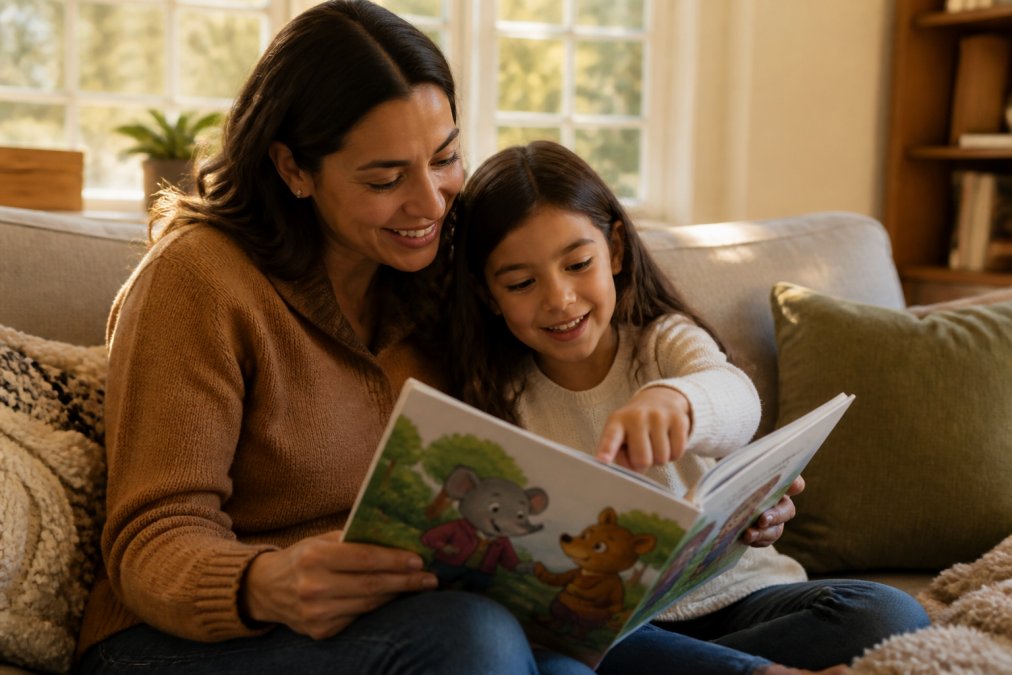
As children enter formal schooling, social emotional books for kids must evolve to cover friendship dynamics, inclusion, and reading social cues. This is the stage where kids navigate sharing, taking turns, and recovering from playground conflicts. The strongest books show characters making mistakes, apologizing, and trying again.
What 6-8 Year Olds Are Actually Ready To Learn
Most generic book lists treat all elementary ages the same, but a 6-year-old and an 8-year-old are at very different stages. By age 6, most children can identify basic emotions but still struggle with mixed feelings or secondary emotions like embarrassment or jealousy (peer-reviewed research). By age 7-8, children typically develop perspective-taking, understanding that another person's thoughts and feelings differ from their own.
Books that work well for this age group share three features: characters who make believable social mistakes, clear cause-and-effect between actions and feelings, and a resolution involving repair rather than a simple apology.
Specific Picks for Specific Social Challenges
Here are books matched to the specific social challenges that dominate this age group:
For the child who is always the last one picked or left out: The Invisible Boy by Trudy Ludwig shows how a quiet, overlooked child begins to feel seen when a classmate makes a small gesture of inclusion. It builds empathy in children who may not realize they are excluding others and validates the feelings of a child who feels invisible.
For the child who has said something hurtful and regrets it: Each Kindness by Jacqueline Woodson is a heavier, more somber read about the permanence of missed opportunities. The protagonist's classmate moves away before she can make amends, and the book offers no tidy happy ending. It is a powerful conversation starter for 7-8 year olds ready to understand regret, but may be too abstract for a 6-year-old.
For friendship conflicts over sharing or turn-taking: The Day the Crayons Quit by Drew Daywalt personifies the frustrations of feeling overused or underappreciated. Each crayon writes a letter expressing a distinct grievance, giving children a concrete way to talk about their own frustrations without assigning blame.
For understanding that friends can have different perspectives: The True Story of the Three Little Pigs by Jon Scieszka retells a familiar tale from the wolf's point of view. It is an excellent tool for teaching perspective-taking because children already know the "real" story and can compare how the same events look from two angles.
A Developmental Milestone Check for Parents
If you are unsure whether a book is at the right level for your 6-8 year old, use this quick check. A child ready for empathy-focused stories will typically answer "How do you think that character felt?" with more than just "sad" or "mad," offering explanations like "He felt embarrassed because everyone laughed at him." If your child answers with single emotions, start with books that name feelings explicitly before moving to stories that require inference.
Why This Age Group Needs a Different Approach Than Preschoolers
A common mistake parents make is applying preschool-era strategies to elementary-age children. A 4-year-old benefits from sorting colored pom-poms into a feelings jar; a 7-year-old will find that babyish and tune out. Instead, the equivalent activity is role-play with a twist: after reading a friendship story, ask your child to act out the scene twice, once as the character who made the mistake, and once as the character who was hurt. books for emotional development.
For children who are neurodivergent, particularly those with ADHD or autism, the social nuances in friendship stories can be confusing rather than illuminating. If your child struggles to infer social cues, choose books with explicit dialogue that states how characters feel rather than relying on reading facial expressions in illustrations.
How to Teach Emotional Regulation to Kids with Stories
Knowing how to teach emotional regulation to kids is the question we hear most from parents. The most effective method is to use stories as a rehearsal space. When a character feels angry or scared, pause and ask your child, "What do you think they should do?" This turns passive listening into active problem-solving.
The Three-Pass Method: A Structured Approach
Most parents read a social emotional book once and expect the lesson to stick. It rarely does. A more effective approach is the three-pass method:
First pass, the story. Read the book straight through without stopping for questions or commentary. The goal is for the child to absorb the narrative arc and enjoy the story. Interrupting with questions breaks the emotional immersion and makes the book feel like a lesson.
Second pass, the pause. Read the book again, pausing at the moment the character first experiences the difficult emotion. Ask one question only: "What do you think they are feeling right now?" Wait for the answer. Then ask, "What do you think they should do?" Let the child offer solutions before turning the page to see what the character actually does. This is where active problem-solving happens.
Third pass, the connection. Read the book a third time on a different day, and connect it to the child's real life. Ask, "When have you felt like this character did?" If the child cannot think of an example, offer one from your own day. This pass builds the bridge between the fictional world and the child's actual experience.
The 24-Hour Rule for Lasting Learning
A common pattern among parents is to have a great discussion immediately after reading, only to see the child revert to old behaviors the next day. Emotional regulation is not learned in a single sitting; it requires repetition with spacing. The 24-hour rule is simple: 24 hours after reading, bring up the character again in a completely different context. If your child is about to have a meltdown over a lost toy, say, "Remember how [character] felt when [situation] happened? What did they do to calm down?"
Matching the Strategy to the Child's Regulation Style
Not all children regulate the same way, and a one-size-fits-all approach will fail for some kids. There are three primary regulation styles, each responding to a different story-based strategy:
The sensory regulator, This child needs physical input to calm down, seeking deep pressure, movement, or proprioceptive input. Pair the story with a physical action: after reading about an angry character, have the child squeeze a pillow, do wall push-ups, or wrap themselves in a blanket. The story provides the emotional context; the physical action provides the regulation.
The cognitive regulator, This child needs to understand why they feel what they feel before they can calm down. They ask "why" questions constantly and benefit from stories that explain the cause of emotions. Pause during the story to explicitly label the chain of events: "First this happened, then the character felt this way, and here is why." This child needs the logic of emotions spelled out.
The social regulator, This child calms down through connection and reassurance, needing to know they are not alone in their feelings. Emphasize moments in the story where the character seeks help from a friend or family member, pointing out that the character did not have to solve the problem alone. After reading, offer physical closeness, a hug, sitting together, as the primary follow-up.
Discussion Prompts for Parents and Teachers
The right question after reading matters more than the book itself. Instead of asking "Did you like it?", try prompts that connect the story to the child's own experience:
- "When did you feel as frustrated as [character]?"
- "What could [character] have done differently?"
- "What helps you calm down when you feel like [character] did?"
These open-ended questions encourage emotional expression and give adults insight into a child's inner world. For educators, using these prompts in a morning meeting circle can build a classroom culture of emotional awareness and mutual respect, supporting the goals of the National Association for the Education of Young Children (NAEYC) on developmentally appropriate practice.
The Role-Play Extension for Stubborn Behaviors
If a child continues to struggle with a specific behavior despite repeated readings and discussion, role-play is the most effective next step. Set up a scenario that mirrors the book's conflict but uses the child's actual triggers. Use stuffed animals or action figures if the child is resistant to direct role-play. The key is to rehearse the desired behavior in a low-stakes context before the child needs it in a high-stakes one.
For children with sensory sensitivities or who are neurodivergent, stories with clear, predictable emotional arcs are especially valuable, providing a script for what to do when overwhelmed.
Printable Social Emotional Learning Activities to Pair with Books
To make the lessons stick, pair each book with a structured activity. Printable social emotional learning activities are ideal because they are low-prep and can be tailored to the specific skill a child is developing. A simple "Feelings Thermometer" worksheet lets a child color in where they are on a scale from calm to explosive, helping them connect bodily sensations with emotional states.
A "Kindness Tracker" chart works well for reinforcing positive behavior after reading a book about empathy. Each time the child demonstrates the target behavior, they add a sticker or token, creating a clear, visual link between the story's lesson and the child's daily actions. Bene World Toys builds this principle directly into our kits: our story-led plush companions come with a token-based reward system, so a child reads about kindness with a Bene Bear® kit and then earns tokens for practicing it in real life.
| Activity | Best Paired With | Skill Reinforced | Frequency |
|---|---|---|---|
| Feelings Thermometer | Any emotion-naming book | Emotional awareness | Daily check-in |
| Kindness Tracker | Books on empathy | Positive reinforcement | Weekly goal |
| Role-Play Scenarios | Friendship stories | Conflict resolution | After reading |
| Gratitude Jar | Thankfulness books | Gratitude habit | Bedtime routine |
Which Book Should You Pick? A Quick Decision Guide
With so many strong options, choosing the right starting point can feel overwhelming. The decision comes down to the specific challenge your child is facing right now. If your three-year-old has frequent meltdowns over transitions, start with a book that explicitly names anger and frustration, like The Color Monster. If your seven-year-old is struggling to make friends, lean toward empathy and social cue stories like The Invisible Boy.
For families who want a more integrated approach, consider a kit that combines a story with a tangible reward system. The Haylo the Horse kit from Bene World Toys is designed for children ages 3-6 who experience big feelings, offering a gentle way to guide anger, sadness, and anxiety without power struggles. Each time your child practices calming, they earn a token to place in Haylo's pouch, reinforcing emotional growth with positivity rather than pressure. For a focus on kindness and respect, the Bene Bear® kit turns "good choices" into a daily habit with a storybook and 15 reward tokens.

Conclusion: Start Your Social Emotional Library Today
Building a child's emotional intelligence takes time, patience, and the right tools. The best social emotional books for kids open the door to conversations, but real growth happens when you pair those stories with consistent discussion and practice. Starting with one good book and one follow-up activity is enough to create meaningful change.
At Bene World Toys, we believe that Toys With A Purpose® make positive behavior repeatable. Our My Reward Pal™ Collection bundles all four core kits, Bene Bear®, Sparkle the Rescue Dog®, Seawhee the Turtle, and Haylo the Horse, into one system that helps children manage big emotions, build daily habits like gratitude, and reduce power struggles through meaningful conversation. Get started with Bene World Toys and turn story time into a foundation for lifelong emotional health.

Frequently Asked Questions
What are some good books about social-emotional learning for kids?
Strong options include The Color Monster for naming feelings, The Invisible Boy for empathy, and Jabari Jumps for building courage. For a hands-on approach, pair a storybook with a plush kit like Haylo the Horse ($34.99) so your child can practice calming techniques with a tangible companion. Look for books that model specific coping strategies rather than just naming an emotion.
How do I choose age-appropriate social emotional books?
For ages 3-5, choose books with simple plots and clear emotional vocabulary, like Llama Llama Mad at Mama. For ages 6-8, select stories with more complex social situations involving peer interaction and conflict resolution. Consider your child's specific needs: a sensitive child may benefit from books about frustration tolerance, while a child starting school needs stories about sharing and friendship.
Can reading books improve a child's emotional intelligence?
Yes, when paired with discussion. Reading exposes children to emotional vocabulary and scenarios they may not have experienced yet. The key is stopping to ask questions like, "How do you think that character felt?" and "What would you do?" This turns a passive activity into active emotional awareness. Extend the lesson with printable social emotional learning activities or a token-based reward system to reinforce positive behavior.
What is the best social-emotional learning curriculum for home use?
The best home curriculum is consistent and playful. Rather than a rigid program, choose a mix of storybooks and activities that target specific skills like empathy, gratitude, and impulse control. The Bene Bear Kit ($34.99) offers a structured token system that turns "being kind" into a visible, repeatable habit. Use the storybook to introduce the concept, then reinforce it daily with tokens for real-life behavior.