


®Table of Contents
- What to Look for When You Buy Social Emotional Learning Kits
- Quick Comparison: Top Social Emotional Learning Kits
- Bene Bear®: Best for Teaching Kindness and Respect
- Haylo the Horse: Best for Big Emotions and Calming Down
- Social Emotional Learning Toys for Preschoolers: Sparkle, Seawhee, and Friendship Tails
- Printable Social Emotional Learning Activities to Pair With Your Kit
- Home vs. Classroom: Using SEL Kits in Different Settings
- Frequently Asked Questions
Last Updated: September 12, 2026
What to Look for When You Buy Social Emotional Learning Kits
When you buy social emotional learning kits, you are investing in a structured system for teaching self-regulation, empathy, and emotional literacy, not just a plush toy. The best kits pair a tactile companion with a repeatable routine, so the learning sticks long after the novelty wears off.
At Bene World Toys®, we designed our kits around one principle: children learn prosocial behavior when they can see, touch, and repeat it. Before choosing any kit, evaluate four things.
- A tangible reinforcement system. Stickers and apps fade. Physical tokens a child can hold create a concrete connection between action and outcome.
- A story-led entry point. A character gives children language for abstract feelings like anxiety or gratitude.
- Flexibility across behaviors. The kit should adapt as your child's needs shift, not lock you into one lesson.
- Adult guidance built in. Look for write-in pages or prompts that turn the kit into a shared activity.
A common mistake is buying a plush toy and assuming the learning happens on its own. It does not. The routine is the product.
Ages and Stages: Matching Kits to Developmental Milestones
Age fit matters more than any other factor: a kit that frustrates a three-year-old will bore a seven-year-old.
For ages 3 to 6, children are still developing emotional vocabulary and need simple language plus heavy adult scaffolding. Kits focused on naming feelings, calming down, and basic kindness work best. Haylo the Horse, for example, is built for ages 3 to 6 and targets big emotions specifically.

For ages 4 to 8, children can handle more abstract concepts like gratitude, friendship, and responsibility. Kits with conversation starters and peer interaction scenarios fit this window, Friendship Tails and Thankful Tails both sit here.
Quick Comparison: Top Social Emotional Learning Kits
The table below summarizes each kit by focus area, age range, and price. Use it to shortlist before reading the full breakdown.
Kit |
Primary Focus |
Best Age Range |
Price |
|---|---|---|---|
Kindness, respect, empathy, giving |
3-8 |
$34.99 |
|
Emotional regulation, calming down |
3-6 |
$34.99 |
|
Sparkle the Rescue Dog® |
Empathy through pet care |
4-8 |
$34.99 |
Seawhee the Turtle |
Empathy for nature, responsibility |
4-8 |
$34.99 |
Friendship Tails (Pyro & Uniglo) |
Friendship skills, inclusion |
4-8 |
$24.99 |
Brave Tails (Gracey & Louey) |
Courage, confidence |
4-8 |
$24.99 |
Thankful Tails (Nash & Frankie) |
Gratitude, daily reflection |
4-8 |
$24.99 |
My Reward Pal™ Collection |
All four core kits |
3-8 |
$124.99 |
Bene Tails Bundle |
All three Tails kits |
4-8 |
$68.99 |
Bene Bear®: Best for Teaching Kindness and Respect
Bene Bear® is the strongest starting point for most families. It targets the "big four" traits, respect, kindness, empathy, and giving, through a token-based reward system children can operate themselves.
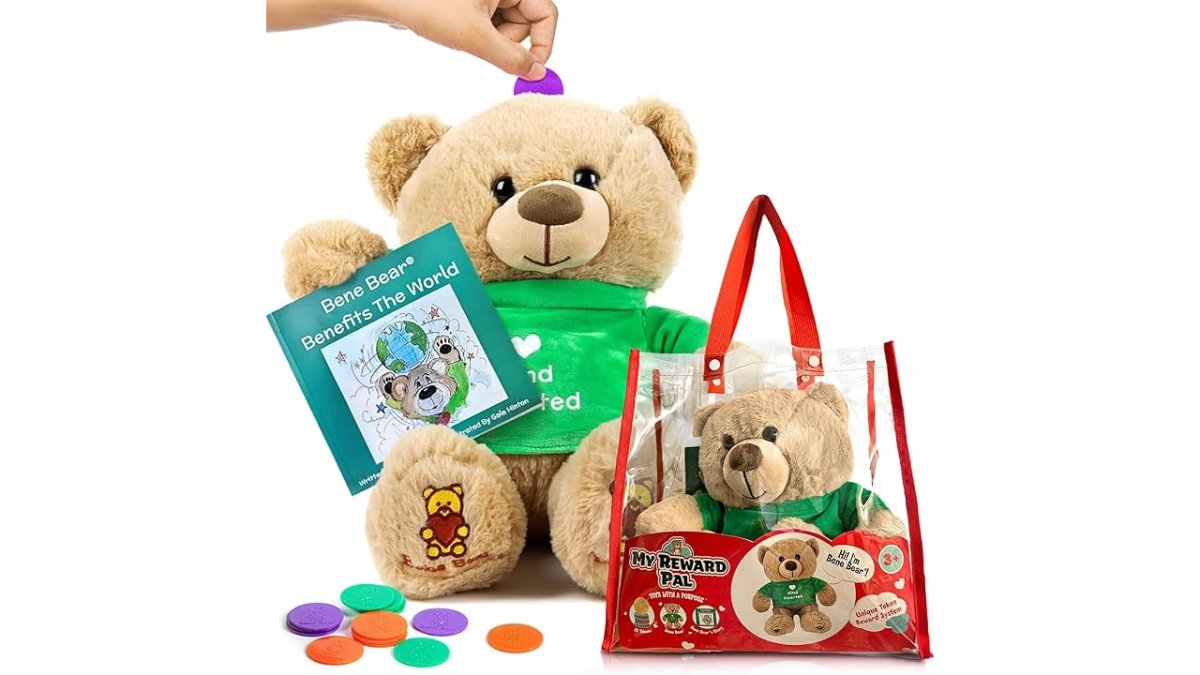
Here is how it works. You choose the behaviors to reinforce this week, kind words, listening, helping, or gentle hands. Your child earns tokens for those behaviors and, after collecting all 15, redeems a reward you set in advance. The storybook introduces the character; the tokens make the lesson repeatable.
What most guides miss is that flexibility is the real feature. A sticker chart locks you into one target behavior; Bene Bear® lets you shift focus as your child's needs change, which is why families keep using it well past the first month.
The one limitation: children under three will need constant adult involvement to place tokens. This is not a set-and-forget tool for toddlers.
Integrating these tactile experiences with books teaching kindness helps children internalize complex emotional concepts through both play and narrative reflection.
Haylo the Horse: Best for Big Emotions and Calming Down
If your household struggles with meltdowns, power struggles, or after-school escalation, start with Haylo the Horse. It gives children a physical anchor for calming down rather than a lecture.
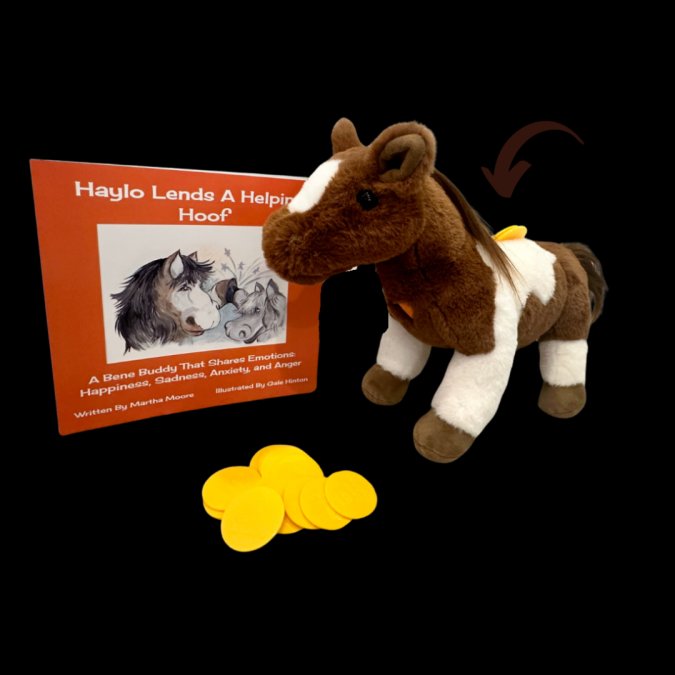
Each time your child names a feeling or calms themselves, they earn a token for Haylo's pouch. The reinforcement is positive, not punitive, and the routine builds three skills in sequence: naming feelings, calming down, and expressing emotions safely.
Best for ages 3 to 6, it is particularly effective for sensitive children or those who feel emotions intensely. Parents of children with autism often find the structured, gentle approach works well because the steps are always the same (autismspeaks.org).
Social Emotional Learning Toys for Preschoolers: Sparkle, Seawhee, and Friendship Tails
Social emotional learning toys for preschoolers work best when they connect an abstract skill to something a child already cares about. That is the design principle behind three kits in the Bene World Toys line, and why the preschool years are the highest-leverage window for this purchase.
Between ages 3 and 5, children move through a predictable sequence: labeling basic emotions (happy, sad, mad, scared), recognizing those feelings in others, simple perspective-taking ("she is sad because I took her turn"), then repairing a relationship after conflict (the CDC). A kit that skips a step frustrates a child; one that stays a step ahead stretches them. Hold that milestone map in mind as you read the three kits below.
Sparkle the Rescue Dog®, empathy through caregiving (ages 4-8). Sparkle targets perspective-taking. Children earn tokens for respectful words, helping, and pet-care tasks, behaviors a preschooler can already perform. The pet-care framing matters: caring for a dependent creature is one of the earliest reliable ways children practice putting someone else's needs first. A portion of every purchase supports an animal rescue organization, giving the lesson a real-world anchor when your child asks why the dog needed rescuing.
Seawhee the Turtle, empathy for the natural world (ages 4-8). Seawhee targets the same perspective-taking step but points it at a non-human subject. That difference matters: children who struggle to read other people's faces often find it easier to reason about an animal or ecosystem first, then transfer the skill to peers. Seawhee turns "care for the ocean" into small, concrete actions a preschooler can take, which makes the abstraction stick.
Friendship Tails (Pyro & Uniglo), friendship skills and inclusion (ages 4-8). Friendship Tails targets the repair step, the hardest preschool skill. When your child shows friendship, they connect the characters' magnetic tails. That tactile moment is the reinforcement, and it works because it is immediate, no waiting for a sticker or chart to feel the result of a kind act. The magnetic connection is also a physical metaphor: two separate things become one when someone chooses to connect them.
One practical note: the same kit that delights a four-year-old can feel babyish to a six-year-old, and the reverse is also true. The age ranges above are wide on purpose, but the milestone map is the real filter. Buy for the step your child is on, not the birthday on the box.
Printable Social Emotional Learning Activities to Pair With Your Kit
Printable social emotional learning activities extend any kit's value with low-prep options for days when a full routine is not realistic. A physical kit builds the habit; printables fill the gaps, and answer the question most buyer's guides dodge: what if a full kit is not in the budget this month?
The DIY route, priced honestly. A complete kit with a plush character, storybook, tokens, and write-in pages typically runs $24.99 to $34.99, and a bundle of four can reach $124.99, reasonable for a year of use, but not nothing (amazon.com). If you want to test whether your child will engage with a structured SEL routine before committing, build a functional version for the cost of printer paper and a folder:
- A feelings check-in chart. Print a simple grid of six faces (happy, sad, mad, scared, tired, excited). Your child points to one each morning and after school. This is the single highest-value printable in the whole category because it builds the labeling habit that every kit depends on.
- A token jar. Any clear jar plus a roll of pennies or buttons does the job a plush pouch does. The mechanism is identical: a visible, countable record of a behavior. The kit's advantage is that the character makes the routine feel like a story rather than a chore.
- A three-line gratitude page. "Today I am thankful for..." repeated three times, printed fresh each night. This is the printable version of what Thankful Tails does with Nash and Frankie.
- Scenario cards. Write six situations on index cards ("a new kid is sitting alone at lunch"). Draw one at dinner and ask what a good friend would do.
The trade-off is real: a DIY setup costs close to nothing but asks more of the adult, you must remember to print, refill the jar, and run the routine. A kit packages the routine so it survives a tired Tuesday. Families who try the DIY version first and then buy a kit tend to stick with it longer, because they already know the routine works.
Three pairings that work particularly well with a kit you already own:
- Emotion charades. Print a set of feeling cards and have your child act each one out. Pair with Haylo the Horse for naming practice.
- Gratitude journaling pages. A simple three-line template pairs naturally with Thankful Tails at bedtime.
- Friendship scenario cards. Present a short situation and ask what a good friend would do. The What Would You Do? Situational Card Game covers this ground with 60 ready-made cards for $7.99, which is the middle path between printing your own and buying a full kit.
Home vs. Classroom: Using SEL Kits in Different Settings
The same kit behaves differently at home and in a classroom, so the implementation should change accordingly, a gap most buyer's guides skip.
At home, one child owns the routine. You set the target behavior, the reward, and the pace. Sessions run five to ten minutes, often after school or before bed.
In a classroom with 15 or more children, individual token tracking becomes unmanageable. Teachers typically run the kit as a group activity: read the story aloud, then track collective progress toward a shared reward. The What Would You Do? card game scales well here because it is turn-based and competitive by design.
For educators working within a preschool curriculum, the most practical approach is rotating kits by theme across the school year, one month on kindness, one on calming down, one on friendship. This keeps props fresh and gives every child repeated exposure to each skill.
A common mistake in both settings is introducing too many kits at once. Pick one, run it for a full month, then add another.
Choosing the right kit comes down to one question: what does your child need to practice right now? Kindness, calm, friendship, or gratitude. Bene World Toys builds each kit around a single skill so the routine stays simple enough to actually keep. The token-based reward system makes positive behavior repeatable, the story-led format gives children language for hard feelings, and the write-in pages turn each kit into shared time between adult and child. Start with the kit that matches your child's current struggle, then expand from there. Shop now at Bene World Toys and turn one small daily habit into lasting emotional resilience.
Frequently Asked Questions
What should be included in a high-quality social emotional learning kit?
A strong kit pairs a hands-on tool with a repeatable routine. Look for a storybook or guide that introduces the skill, a plush or character kids bond with, and a tracking method such as tokens or a chart. Bene Bear® includes a storybook and 15 reward tokens, so kids see progress as they practice kindness, respect, and empathy. The routine matters more than the number of items.
Are social emotional learning kits effective for toddlers?
They can be, when the format matches the child's age. Toddlers respond to simple language, cuddly characters, and immediate feedback. Kits built around story plus play, like Haylo the Horse for ages 3 to 6, give toddlers a concrete way to name feelings and calm down. Keep sessions short, under five minutes, and repeat the same phrases daily so the habit sticks.
How do plush toys and storybooks support social emotional learning?
Plush toys give children something to hold during big feelings, which makes calming strategies easier to practice. Storybooks provide the language: characters face a problem, try a skill, and succeed. Together they turn abstract ideas like empathy or bravery into scenes a child can replay. The magnetic tail connection in Friendship Tails, for example, gives kids a tactile way to mark a kind or brave moment.
Can social emotional learning kits help with emotional regulation?
Yes, when the kit includes a calming routine. Haylo the Horse was designed for exactly this: children earn tokens each time they practice calming and expressing emotions, which reinforces the behavior without pressure. The token system makes progress visible, and the plush companion offers comfort during meltdowns. Consistency matters more than the kit itself, so use it during transitions, after school, and before bed.
What are the benefits of using a token-based reward system for SEL?
Token systems make positive behavior repeatable because kids see immediate, tangible feedback. Instead of waiting for a weekly sticker chart, a child earns a token right after a kind word or a calm response. Collecting all 15 tokens leads to a reward you choose, which keeps motivation steady. Bene World Toys uses this model across its kits, and it works for both home and classroom settings.