


Table of Contents
- Why Teachers Are Searching for a HappyHeartKid Alternative for Classroom Use
- What to Look for in Classroom SEL Kits: A Teacher's Selection Framework
- Bene World Toys Classroom Kits: A Direct Product Comparison
- Emotional Regulation Activities for Students Using Plush and Story Kits
- Printable Social Emotional Learning Activities That Complement Physical Kits
- How to Implement a Token-Based SEL System in Your Classroom
- Common Mistakes Teachers Make When Switching SEL Programs
- Conclusion: Choosing the Right Classroom Alternative
- Frequently Asked Questions
Last Updated: October 4, 2026
Why Teachers Are Searching for a HappyHeartKid Alternative for Classroom Use
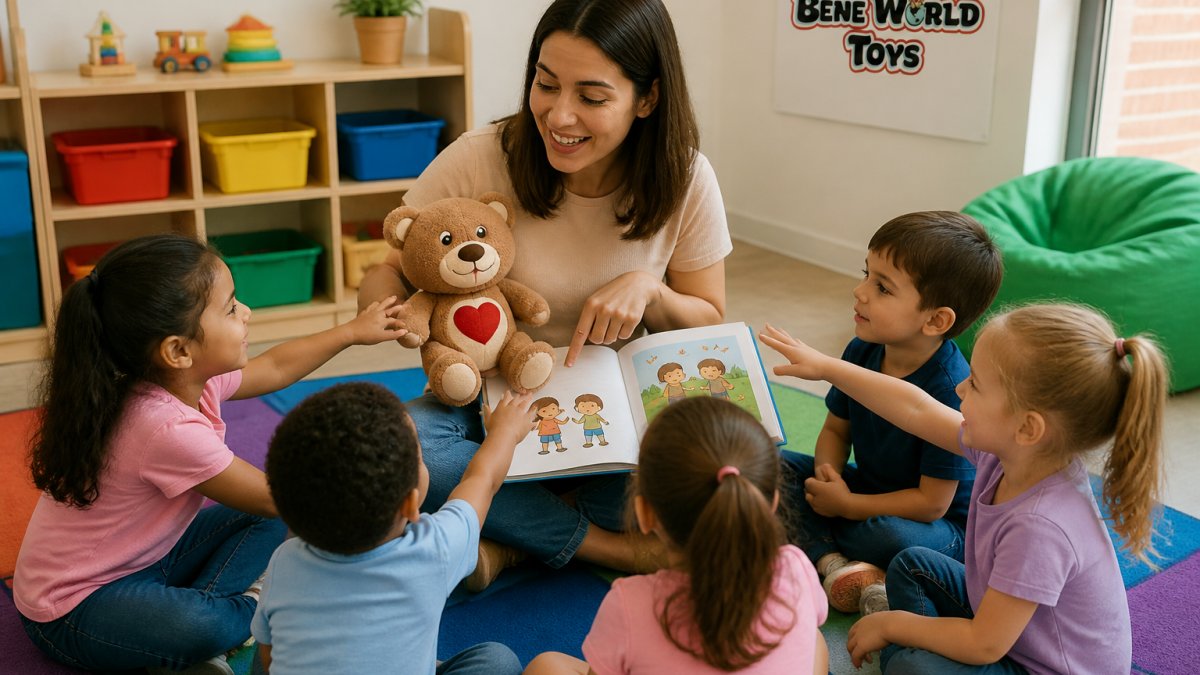
Teachers searching for a happyheartkid alternative for classroom use usually share the same problem: they want a social-emotional learning kit that survives a room of fifteen preschoolers, not one child at a kitchen table.
The core issue is structural. The Collaborative for Academic, Social, and Emotional Learning framework outlines five core competencies that any classroom SEL kit should reinforce, and that framework is a better starting point than any single product's marketing.
Below, we break down what actually matters when you evaluate a classroom kit, compare the Bene World Toys line directly, and give you a week-by-week rollout you can start on Monday.
What to Look for in Classroom SEL Kits: A Teacher's Selection Framework
The best classroom SEL kit balances three factors: durability, group size, and budget fit. A kit that fails any one of these will sit in a cabinet by November.
Durability, Group Size, and Budget Fit
Plush toys and storybooks handle very different wear at home versus in a classroom. In a room of fifteen children, a plush companion gets passed, dropped, and squeezed dozens of times a day. Look for stitched construction, a secure token pouch, and a storybook with a sturdy binding rather than a thin paperback.
Group size changes how you use the kit. A single plush companion works for a small-group rotation of four to five children, while a full classroom needs either multiple companions or a clear sharing schedule.
Evidence-Based Efficacy: What Research Says About Token Systems
Token systems have a long track record in behavioral support, and the underlying principle is straightforward: a behavior that gets acknowledged immediately is more likely to repeat.
What most guides miss is that the token itself is not the reward. The token is a visible record of the behavior. The reward is whatever the teacher and child agree on, and it should stay small and repeatable.
| Selection Factor | What to Check | Why It Matters |
|---|---|---|
| Durability | Stitched seams, secure pouch, sturdy book binding | Survives daily group handling |
| Group size | One companion per 4-5 children, or a rotation schedule | Keeps every child engaged |
| Budget fit | Per-companion cost under $35, tokens sold separately | Fits a teacher's own budget |
| Reset speed | Tokens reusable, no consumables | Works all year without refills |
| Behavior fit | Named behaviors you choose | Matches your classroom rules |
Bene World Toys Classroom Kits: A Direct Product Comparison
For classroom use, the strongest options in the Bene World Toys line are Bene Bear®, Haylo the Horse, Sparkle the Rescue Dog®, and Seawhee the Turtle, each priced at $34.99 with a storybook and 15 reward tokens. Each kit targets a different SEL focus, so the right pick depends on what your classroom needs most.
Bene Bear® for Respect, Kindness, and Empathy
Bene Bear® is our top pick for a general classroom kit. It reinforces respect, kindness, empathy, and giving, and it lets you choose the behaviors you want to track. Children earn tokens and redeem a reward you set once they collect all 15. For a classroom, that flexibility matters: you can run it as a group goal or rotate it among children.
Haylo the Horse for Emotional Regulation
Haylo the Horse is built for big feelings. Children earn tokens by practicing calming and expressing emotions, then place them in Haylo's pouch. It is best for ages 3-6, especially sensitive children who need a gentle reset after a transition or a conflict.
Sparkle the Rescue Dog® and Seawhee the Turtle for Empathy and Responsibility
Sparkle the Rescue Dog® centers on pet care and kindness to animals, and a portion of each purchase supports an animal rescue organization. Seawhee the Turtle builds empathy for the ocean and responsibility through small everyday actions. Both work well as a second companion for a classroom that already runs a token system.

If you want the full set, The My Reward Pal™ Collection bundles all four kits for $124.99.
| Kit | Primary Focus | Best Ages | Price |
|---|---|---|---|
| Bene Bear® | Respect, kindness, empathy, giving | 3-8 | $34.99 |
| Haylo the Horse | Emotional regulation | 3-6 | $34.99 |
| Sparkle the Rescue Dog® | Empathy, pet care, responsibility | 4-8 | $34.99 |
| Seawhee the Turtle | Empathy, ocean responsibility | 4-8 | $34.99 |
| My Reward Pal™ Collection | All four kits | 3-8 | $124.99 |
Emotional Regulation Activities for Students Using Plush and Story Kits
Emotional regulation activities for students work best when they are short, repeatable, and tied to a physical object the child can hold. A plush companion gives a child something to focus on while naming a feeling, which lowers the pressure of the moment.
Try these three routines with Haylo the Horse or any companion kit:
- Feelings check-in: After a transition, ask the child to name the feeling and place a token in the pouch once they have said it out loud.
- Calm-down corner: Keep the companion in a quiet spot. A child can hold it, take five slow breaths, then rejoin the group.
- Story pause: Read the storybook and stop at a moment when the character feels angry or sad. Ask children what the character could do next.
Head Start Early Childhood Learning and Knowledge Center guidance on supporting social-emotional development notes that naming feelings and practicing calm-down strategies during low-stress moments makes those skills easier to use during real conflict. Practicing when nothing is wrong is the whole point.
Printable Social Emotional Learning Activities That Complement Physical Kits
Printable social emotional learning activities extend a physical kit without adding cost, and they give you a paper trail you can share with families. The token system handles the daily reinforcement; printables handle reflection and home connection.
Three printables that pair well with a token kit:
- Feelings journal page: A simple sheet where the child draws the feeling and writes one word for it.
- Token tracker: A grid where the child colors a square for each token earned toward the reward.
- Family conversation card: A take-home sheet with one question, such as "What was one kind thing you did today?"
The What Would You Do? Situational Card Game at $7.99 is a printed alternative to a worksheet. It includes 60 situational cards, and players earn a point for choosing the answer that shows positive behavior. It works well as a small-group center activity.

How to Implement a Token-Based SEL System in Your Classroom
A token-based SEL system takes about two weeks to become routine. The key is to introduce one behavior at a time rather than launching the full system on day one.
Week-by-Week Rollout for Preschool and Early Elementary
Week 1: Introduce the companion and one behavior. Pick a single behavior, such as gentle hands or kind words. Read the storybook once as a group.
Week 2: Add the token routine. Let children place their own token in the pouch.
Week 3: Add a second behavior. Now that the routine is set, introduce a second behavior.
Week 4: Hand over the reset. Show children how tokens are removed and reused.
National Association for the Education of Young Children guidance on developmentally appropriate practice supports introducing one new routine at a time and keeping expectations concrete for young children.
Common Mistakes Teachers Make When Switching SEL Programs
The biggest mistake is switching systems mid-year without a transition period. Children who have used a sticker chart or a points app need time to understand that the new system works the same way, just with a different tool.
Other mistakes we see often:
- Choosing too many behaviors at once. Start with one, add a second only after the first is automatic.
- Making the reward too big. A large prize turns the system into a negotiation. Keep rewards small and frequent.
- Skipping the story. The storybook is what gives the companion meaning. Without it, the plush is just a toy.
- Leaving the companion out of reach. If children cannot touch it, they disengage. Keep it accessible.
- Not telling families. A one-page note home explaining the token system prevents confusion and gets parents reinforcing the same behaviors.
Conclusion: Choosing the Right Classroom Alternative
Choosing a happyheartkid alternative for classroom use comes down to matching the kit to your group, not to the biggest bundle. Start with one companion, run the four-week rollout, and let the token routine prove itself before you expand.
Bene World Toys builds classroom-ready kits around a token-based reward system, story-led learning, and a magnetic tail connection that makes the routine tactile for young children. If you teach a group of fifteen, add the 15 Additional Bene Tokens for $3.99 so every child has a token in hand.

Get started with Bene World Toys and give your classroom a social-emotional routine that holds up past November.
Frequently Asked Questions
What are the best social emotional learning tools for elementary classrooms?
The strongest options combine a plush character, a storybook, and a token reward system students can see and touch. Bene Bear® ($34.99) covers respect, kindness, empathy, and giving. Haylo the Horse ($34.99) targets emotional regulation for ages 3-6. Sparkle the Rescue Dog® and Seawhee the Turtle ($34.99 each) build empathy through pet-care and ocean themes. The What Would You Do? Situational Card Game ($7.99) adds 60 scenario cards for group discussion. Classroom SEL kits work best when the plush stays visible and tokens are handed out the moment a behavior happens.
How do plush-based SEL programs support emotional regulation in students?
A plush character gives a child something physical to hold during a big feeling, which slows the escalation before words are needed. Haylo the Horse was built around this: children practice calming and naming emotions, then place a token in Haylo's pouch. The token marks the effort, not just the outcome, so a child who calms down after a tantrum still earns recognition. Teachers report fewer power struggles when the routine is consistent. Pair the plush with a short script like 'Haylo feels upset too. What helps him calm down?'
Are there printable SEL activities that complement physical classroom kits?
Yes. Printable social emotional learning activities work best as the paper trail around a physical kit. Common pairings include feeling-face coloring sheets, a daily kindness log where students record one kind act, scenario cards for circle time, and a token tracker chart that mirrors the 15-token cycle in Bene Bear®. Print on cardstock and laminate the tracker so it survives the school year. The printable reinforces what the plush and tokens already teach, so students connect the abstract concept to something they can hold.
What should teachers look for when choosing an SEL curriculum alternative?
Check four things: group size fit, replacement cost for lost tokens, whether the storybook matches your students' reading level, and whether the system works without an app or subscription. Bene World Toys kits use a one-time purchase model, with Bene Bear® at $34.99 and a 15-token refill pack at $3.99, which matters for a classroom budget. Look for a token system that resets and reuses rather than one that consumes stickers or points.
How can educators integrate SEL into daily classroom routines without adding prep time?
Attach the SEL moment to something you already do. Hand out tokens during morning meeting when a student uses a kind word, after recess when someone helps clean up, and at dismissal when a child names how their day felt. The What Would You Do? Situational Card Game ($7.99) fills five minutes of transition time with a scenario and a group vote. Keep the plush on a shelf at child height so students can reach it during a hard moment without asking. No extra lesson planning required.