


Last Updated: November 8, 2026
Quick Summary
There is no fixed timeline for how long does SEL take to show results, because social-emotional skills build gradually over time and the pace varies from child to child. Like learning to read, empathy grows with steady practice rather than arriving all at once, so progress is often quiet and not linear.
- The CASEL framework describes five linked skills, each building at its own pace.
- Kids regress when tired, hungry, or stressed, and that is normal.
- A child may show empathy at school and none at home in the same week.
- Five focused minutes a day beats one long lecture a month.
- Keep the four-step routine and adjust the pace for different ages and needs.
Table of Contents
- How Long SEL Results Actually Take: A Realistic Timeline
- Signs Your Child Is Making Progress (Even When It's Hard to See)
- Daily Empathy Habit for Elementary Schoolers: The Five-Minute Routine
- Where to Start
- Frequently Asked Questions
How Long SEL Results Actually Take: A Realistic Timeline
Parents asking how long does SEL take to show results want a number. Social-emotional skills build gradually over time, and the pace varies from child to child. Like learning to read, empathy grows with steady practice rather than arriving all at once.
The Collaborative for Academic, Social, and Emotional Learning framework describes five linked skills, self-awareness, self-management, social awareness, relationship skills, and responsible decision-making, each building at its own pace. Don't judge progress by one bad afternoon; kids regress when tired, hungry, or stressed, and that's normal.
Signs Your Child Is Making Progress (Even When It's Hard to See)
Progress is often quiet: naming a feeling instead of melting down, noticing a friend is upset, pausing before grabbing a toy, apologizing unprompted. It isn't linear, a child may show empathy at school and none at home in the same week. Jotting down one kind moment on your phone can make patterns easier to notice over time.
To move beyond reward charts, see our guide on moving kids from reward charts to intrinsic motivation. Skeptical parents can read real testimonials from parents and educators.
Daily Empathy Habit for Elementary Schoolers: The Five-Minute Routine
Five focused minutes a day beats one long lecture a month, short, repeatable, and tied to real moments, which is why it works for empathy activities for kids.
- Name it (1 minute): Ask, "What was one feeling you had today?"
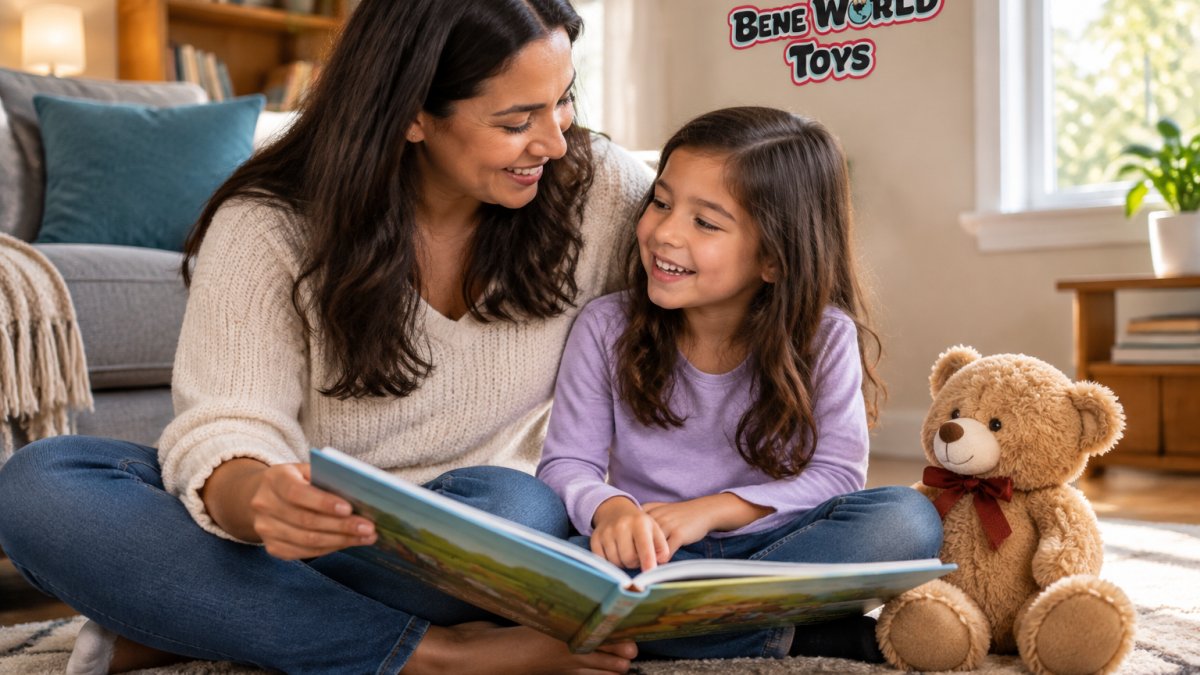
- Read it (2 minutes): Read one page of a storybook and ask, "How do you think that character felt?"
- Practice it (1 minute): Act out a tiny scene. "Show me a face that says worried."
- Connect it (1 minute): Ask, "Who might need kindness tomorrow?"
For the full version, see building a daily empathy habit for elementary kids. New to SEL? Start with social emotional learning explained for parents.
A plush companion can anchor the routine. Our Haylo the Horse helps children recognize and work through emotions, with tokens for rewards in Haylo's pouch and a magnetic tail for little hands to hold while they talk.

How to teach empathy to a 5-year-old: keep it physical and concrete, faces, voices, simple stories. How to teach empathy to a teenager: shift to real situations, ask what a friend might be going through, and listen without correcting.
What to Do When Your Child Resists
Don't push harder. Let them lead the story choice, ask about a character rather than themselves, keep it to one question then stop, and model it out loud yourself. Turning the routine into a quiz kills it fast, the goal is connection, not a correct answer.
Adapting for Different Ages and Needs
Younger kids need pictures and props; older kids need real scenarios and privacy; children with sensory sensitivities do better with a soft plush and a predictable script. Keep the four steps and adjust the pace.
The whole routine takes five minutes a day, split into four short steps.
| Step | What to do | Time |
|---|---|---|
| Name it | Ask, "What was one feeling you had today?" | 1 minute |
| Read it | Read one page of a storybook and ask how the character felt | 2 minutes |
| Practice it | Act out a tiny scene, like a face that says worried | 1 minute |
| Connect it | Ask, "Who might need kindness tomorrow?" | 1 minute |
Time
Where to Start
Start small and stay consistent, pick one five-minute slot tomorrow and let the habit build. Bene World Toys builds plush companions and storybooks that make that daily habit easy to keep, token-based rewards, story-led kits for big emotions, and write-in pages that spark real conversations. Get started with Bene World Toys and turn five quiet minutes into a habit your child carries for years.
Frequently Asked Questions
How long does social-emotional learning take to show results?
Children's progress with SEL practice varies, and deeper results build over time with consistent practice. The key is daily repetition rather than occasional lessons. Skills like naming emotions, taking another's perspective, and choosing kindness need regular rehearsal to become habits. Expect gradual changes in how your child handles frustration or conflict, not overnight transformation.
How can parents and teachers tell if a child is making SEL progress?
Watch for observable indicators: your child names feelings instead of melting down, pauses before reacting, or shows concern when a peer is upset. Teachers might notice more cooperative play or fewer conflicts during group work. Keep a simple log of moments when your child uses empathy or self-regulation. These small wins accumulate and give you concrete evidence of growth over weeks and months.
What should adults do if a child's SEL progress seems slow?
First, check consistency. Are empathy activities for kids happening most days, even briefly? Second, adjust for developmental stage. A 5-year-old may need simpler emotion vocabulary than a 9-year-old. Third, model the behavior yourself and narrate your own perspective-taking out loud. If concerns persist after several months of steady practice, talk with a school counselor or pediatrician about additional support.