


Last Updated: November 8, 2026
Quick Summary
Social emotional learning is how children learn to recognize and manage emotions, show empathy, build relationships, and make responsible decisions. It breaks into five skill areas: self-awareness, self-management, social awareness, relationship skills, and responsible decision-making. Children acquire these skills through repetition, modeling, and patient practice with the adults who love them.
- The CASEL framework is the most widely used definition of social emotional learning in schools.
- Try feelings charades, the what would you do pause, kindness spotting at bedtime, and a cozy corner reset.
- Elementary school is prime time for empathy because children can hold two ideas at once.
- Build daily empathy habits by naming feelings out loud and repairing after conflict by modeling the apology.
- Haylo the Horse takes tokens into a pouch as a child practices calming down or naming a feeling.
Table of Contents
- Social Emotional Learning Explained in Plain Terms
- Social-Emotional Learning Activities for Kids at Home
- How to Teach Empathy to Children and Build Daily Empathy Habits for Elementary Schoolers
- Frequently Asked Questions
Social Emotional Learning Explained in Plain Terms
Social emotional learning is how children learn to recognize and manage emotions, show empathy, build relationships, and make responsible decisions. It breaks into five skill areas: self-awareness, self-management, social awareness, relationship skills, and responsible decision-making. Children aren't born with these skills, they acquire them through repetition, modeling, and patient practice with the adults who love them. The Collaborative for Academic, Social, and Emotional Learning (CASEL) framework is the most widely used definition in schools, and it matches what most parents already do intuitively. These skills are habits that need daily reps, and tokens give a child something tangible to hold and count. See our guide to the Four R's of emotional regulation.
The CASEL framework breaks social emotional learning into five skill areas children build through daily practice.
| Skill area | What it covers |
|---|---|
| Self-awareness | Recognizing one's own emotions |
| Self-management | Managing emotions |
| Social awareness | Understanding others and showing empathy |
| Relationship skills | Building relationships |
| Responsible decision-making | Making responsible decisions |
Social-Emotional Learning Activities for Kids at Home
You don't need a curriculum, worksheet, or screen, the best social-emotional learning activities for kids are short, playful, and woven into what you already do.
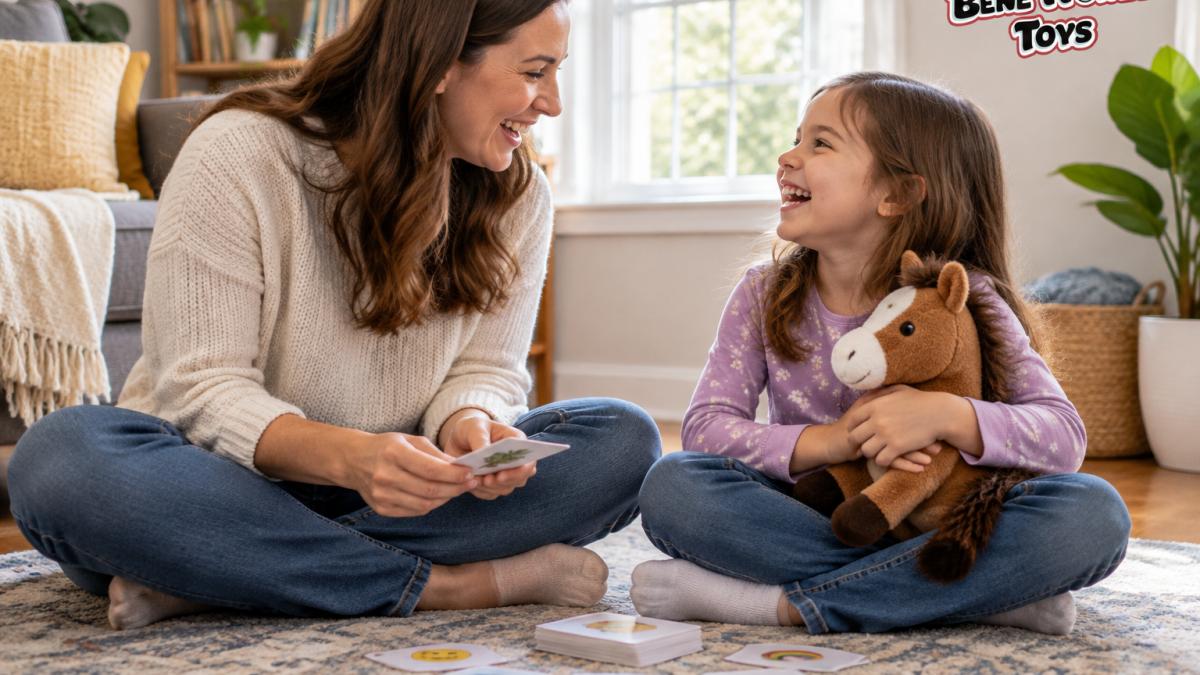
Try feelings charades, the "what would you do" pause (our What Would You Do? Situational Card Game puts 60 of these in one box), kindness spotting at bedtime, a cozy corner reset, and story plus stuffed friend. For more ideas, see our character building activities for families, or bundle all four kits with our My Reward Pal™ Collection.


How to Teach Empathy to Children and Build Daily Empathy Habits for Elementary Schoolers
Empathy is teachable, and elementary school is prime time: children this age can hold two ideas at once, how I feel, and how you feel. Daily habits work best when small and predictable: name feelings out loud, ask the perspective question gently, practice turn-taking in play, do one small kind act a day, and repair after conflict by modeling the apology. For a structured plan, see building a daily empathy habit for elementary kids and our social emotional learning guide for 8 year olds. Haylo the Horse, which takes tokens into a pouch as a child practices calming down or naming a feeling, is one tool for these moments.
Big feelings will still happen, and that's not a failure. Bene World Toys offers plush companions and story-led kits with a token-based reward system, magnetic tails, and write-in pages for parent-child connection. Start with one kit, keep the routine short, and let the small wins stack up.
Frequently Asked Questions
What is social emotional learning, in simple terms?
Social emotional learning (SEL) is how children learn to recognize and manage their emotions, show empathy for others, build healthy relationships, and make responsible decisions. It happens through everyday moments, not just in school. For parents, it means helping a child name a big feeling, calm down, and choose a kind response. Simple tools like plush toys with a token system make those skills repeatable at home.
How can parents support social emotional learning at home?
Start with small daily routines: name feelings out loud, practice one empathy habit like asking a sibling how their day went, and use a visual reward like tokens to reinforce kind choices. Keep it playful and low-pressure. Story-led kits and situational card games give children a safe way to practice problem-solving and perspective-taking before real-life moments arise.
How do you teach empathy to a 5-year-old?
Five-year-olds learn empathy through concrete actions, not lectures. Try role-play with plush toys: ask, 'How do you think Pyro feels when his friend won't share?' Then practice one kind gesture, like drawing a card for a grandparent. Praise the behavior when you see it. Daily empathy habits for elementary schoolers work best when they are short, repeatable, and tied to something tangible, such as connecting magnetic tails after a friendship moment.