


Table of Contents
- What Social Emotional Learning Looks Like at Age 8
- Social Emotional Learning Activities for Kids: A Daily Home Routine
- Social Emotional Learning Games for Kids That Teach Real Skills
- Emotional Regulation Activities for Kids: Helping Your 8-Year-Old Handle Big Feelings
- Empathy Activities for Kids: Teaching Perspective-Taking at 8
- Connecting Home and School: What to Ask Teachers and How to Coordinate
- Progress Indicators and When to Seek Extra Support
- Frequently Asked Questions
Last Updated: October 9, 2026
What Social Emotional Learning Looks Like at Age 8
Social emotional learning for 8 year olds centers on five connected skills: self-awareness, self-management, social awareness, relationship skills, and responsible decision-making. At this age, children move from naming feelings to managing them in real time.
Eight-year-olds are also developing what researchers call "theory of mind," the ability to understand that other people have thoughts and feelings different from their own. The Collaborative for Academic, Social, and Emotional Learning framework breaks social emotional learning into these five core competencies, and most schools build their curriculum around them.
The Five Core Skills and What They Look Like in Third Grade
Here's how each skill shows up in daily life for a typical 8-year-old:
- Self-awareness: Naming specific emotions ("I'm frustrated," not just "I'm mad") and recognizing physical cues like a tight chest or clenched fists
- Self-management: Pausing before reacting, using coping strategies like deep breathing or counting, and calming down without adult intervention
- Social awareness: Noticing when a friend is left out and understanding perspective-taking, the ability to see a situation through someone else's eyes
These skills don't develop on a fixed timeline. An 8-year-old might handle disappointment beautifully at school and fall apart at home, that's normal. The goal isn't perfection; it's repetition.
Social Emotional Learning Activities for Kids: A Daily Home Routine
The most effective social emotional learning activities for kids are short, predictable, and built into your existing day. Ten minutes of consistent practice beats an hour-long weekly session: a morning check-in and an evening reflection, both under five minutes.
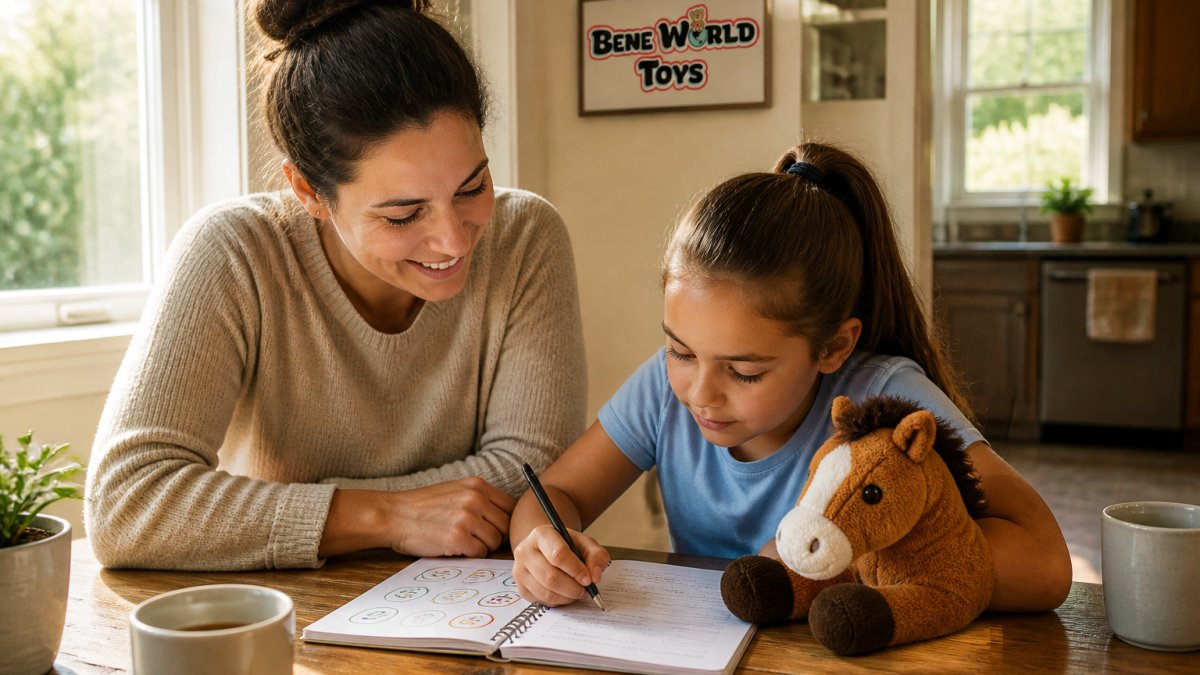
Morning Check-In and Feelings Vocabulary
Start the day by asking your child to name one feeling and one thing they're looking forward to. Keep a printed feelings list on the fridge so they can point if words are hard to find.
If your child says "fine," offer two options instead: "Are you feeling calm or a little nervous about the spelling test?" Forced reflection backfires; guided choice works.
Evening Reflection and Journaling Prompts
At bedtime, try one journal prompt from this list. Rotate through them so the routine stays fresh:
- What was the best part of your day, and why?
- When did you feel frustrated today? What helped?
- Who did you help or share with?
For children who resist writing, let them draw the answer and describe it aloud. Reflection is the goal, not penmanship.
Social Emotional Learning Games for Kids That Teach Real Skills
Social emotional learning games for kids work because play lowers the stakes, building muscle memory children can call on during real conflict. Five games, each under 15 minutes:
- Feelings charades: Act out an emotion and have others guess. This builds identifying emotions and body-language reading.
- What Would You Do? Situational Card Game: A structured card game where players read a scenario, choose the response that shows positive behavior, and earn points. Our What Would You Do? card game turns decision-making practice into a family activity.
- Role-play swaps: Act out a disagreement, then switch roles so your child plays the other person. This is perspective-taking in action.
- Story character detective: After reading a storybook, ask why a character acted the way they did. Story characters give children a safe distance to explore moral reasoning.
- Cooperation challenges: Build a pillow fort or finish a puzzle where the rule is no one gives instructions, only asks questions.
Emotional Regulation Activities for Kids: Helping Your 8-Year-Old Handle Big Feelings
Emotional regulation activities for kids work best when practiced before a meltdown, not during one. An escalated 8-year-old can't learn a new skill in the moment; their thinking brain is offline. Teach tools on calm days, then prompt them during hard ones. Three techniques fit this age:

- Box breathing: Breathe in for four counts, hold for four, out for four, hold for four. Trace a square in the air while doing it.
- The 5-4-3-2-1 grounding scan: Name five things you see, four you hear, three you can touch, two you smell, one you taste.
- Name it to tame it: Encourage your child to say the feeling out loud. Naming an emotion reduces its intensity, a concept documented in UCLA research on affect labeling.
Scripts for Real-Life Moments: After School, Bedtime, and Transitions
The hardest moments follow a pattern: after school, at bedtime, and during transitions. Scripts to adapt:
After school, when your child slams the door: "I can see something happened. I'm here when you're ready to talk. Do you want a snack first or some quiet time?"
At bedtime, when they stall: "You don't have to be sleepy yet. You just have to be in bed. Let's do one journal question together, then lights out."
During a transition, when they refuse to leave: "Two more minutes, then we go. Do you want to set the timer yourself or should I?"
The pattern: acknowledge the feeling, offer a limited choice, hold the boundary.
Five Hard Moments Every 8-Year-Old Faces, and What to Say
Generic calming strategies fall apart during a real social problem. These scripts cover the moments most parents face. Keep them short, keep your voice low, and resist solving the problem for your child.
1. Friendship conflict (a fight with a best friend). Eight-year-olds swing between "she's my best friend forever" and "I'm never talking to her again." Don't referee. Reflect and hand the problem back.
- "That sounds like it really hurt. What do you want to happen tomorrow?"
- "What's one thing you could say to her that's true and kind?"
- "Do you want to practice it with me first?" Building these small moments of empathy into a routine helps children practice kindness daily as a natural response to the inevitable friction of growing up.
2. Losing a game. Losing is a reliable trigger at this age, especially in front of siblings or peers. Coach the recovery, not the outcome.
- "Losing stinks. I get it. Take a minute, then we can talk about the next round."
- "What did you do well, even though you lost?"
- "Want to shake hands and try again, or take a break first?"
3. Frustration with homework. Third-grade homework is often the first wall kids can't charm their way past.
- "This is a hard one. Let's figure out the first step together."
- "Do you want to try it on your own for two minutes, or should we do the first one together?"
- "If it's still stuck after two tries, we'll put it down and come back after dinner."
4. Being left out. Exclusion is the wound that lingers longest at this age. Validate first, problem-solve second.
- "That sounds lonely. I'm sorry that happened."
- "Was it a one-time thing, or does it happen a lot with this group?"
- "Who's one person you feel good around that we could invite over this week?"
5. Apologizing (and accepting an apology). Most 8-year-olds can say "sorry" but can't yet repair. Teach the four-part apology: name what you did, name the impact, say sorry, say what you'll do differently.
- "I grabbed the ball without asking. That made you mad. I'm sorry. Next time I'll ask first."
- When your child is on the receiving end: "You don't have to forgive right away. You can say, 'I need a minute,' and come back to it."
Empathy Activities for Kids: Teaching Perspective-Taking at 8
Empathy activities for kids should move beyond "be kind" into specific practice. At 8, children can handle real perspective-taking exercises, and the payoff shows up in friendship quality and conflict resolution. Try three:

- The two-shoes interview: After a disagreement with a sibling or friend, ask your child to answer three questions as if they were the other person. "What did you want? What did you think was happening? How did you feel?"
- Kindness journaling: Each evening, have your child write or draw one kind act they did or saw. This builds awareness of prosocial behavior.
- Story-based reflection: Read a storybook with a character facing a dilemma, then pause and ask, "What would you do if you were them?" Our Bene Bear storybook is built around this exact idea, introducing kindness, respect, and empathy through a character children follow across pages.
Connecting Home and School: What to Ask Teachers and How to Coordinate
Coordination between home and school doubles the impact of any social emotional learning routine. Children generalize skills faster when language and expectations match across settings.
At your next parent-teacher conference, ask these four questions:
- Which social emotional skills are you focusing on this term?
- How does my child handle frustration during classwork?
- Who does my child work well with, and who do they struggle with?
Then share what you're doing at home. If you use a token system or a feelings journal, tell the teacher. Consistency is what makes the skills transfer.
Progress Indicators and When to Seek Extra Support
Most children improve gradually in emotional regulation over a school year, not overnight. The trick is knowing what to look for, and tracking it without turning your child into a project.
Observable Signs the Skills Are Growing
You don't need a formal assessment to see progress. Watch for these behaviors, which tend to show up in this order:
- Naming feelings without prompting. Your child says "I'm nervous about the test" instead of just acting nervous.
- Faster recovery. A frustration that used to derail an hour now resolves in ten or fifteen minutes.
- Self-initiated calming. Your child reaches for a breathing exercise, a journal, or a comfort object on their own.
Skills typically show up first with adults, then siblings, then peers, and last in the most emotionally charged setting, usually home. That lag is normal.
How to Track Progress Without Labeling Your Child
Avoid charts that rate behavior or compare siblings. Track the routine, not the child.
- Keep a simple two-column log for two weeks: what you practiced, and one thing you noticed. That's it.
- Pick one or two target behaviors, for example, "names a feeling at morning check-in" or "recovers from a lost game within ten minutes."
- Review the log every two weeks and look for trends, not daily wins. One bad Tuesday tells you nothing.
The goal is to notice growth, not grade it. Children who feel evaluated shut down the very reflection you're trying to build.
When to Talk to a Teacher or a Professional
Some children need more support than a home routine can provide. Reach out to your child's teacher, a school counselor, or a pediatrician if you notice:
- Meltdowns that routinely last longer than 15 minutes past age 8
- Difficulty making or keeping friends over several months, not just a rough week
- Persistent anxiety, aggression, or withdrawal that affects daily life at home and at school
A pediatrician or school counselor can help you decide whether an evaluation is warranted. Asking for one isn't a diagnosis, it's information.
Adapting the Routine for Different Learning and Sensory Needs
Children with communication differences, attention challenges, or sensory sensitivities often thrive with the same routines, adjusted three ways:
- Shorter sessions. Two or three minutes beats ten. Frequency matters more than duration.
- More visual and tactile supports. Feelings cards, a picture schedule, or a comfort object can carry the load when words are hard.
- Fewer choices at once. Offer two options instead of five, and give a longer pause before expecting an answer.
For children with autism or sensory sensitivities, a comfort object that meets a specific sensory need, weight, texture, or a magnetic connection, can make the difference between a routine that sticks and one that doesn't. Our plush kits use a magnetic tail connection and a token pouch for grounding tactile feedback.
Frequently Asked Questions
What social-emotional skills should an 8-year-old have?
By age 8, most children can identify and name a range of emotions, use simple coping strategies like deep breathing or counting, take turns in conversation, and show empathy when a friend is upset. They are also developing problem-solving skills for disagreements and can follow multi-step directions. These milestones vary, and some children need more practice with emotional regulation activities for kids. If your child struggles with most of these consistently, talk with their teacher or pediatrician.
How can I help my 8-year-old manage big feelings?
Start by naming the feeling without judgment: "It looks like you're really frustrated right now." Then offer a physical calming tool, such as squeezing a plush toy, taking five slow breaths, or walking to another room. Practice these strategies during calm moments so they become automatic under stress. A token system that rewards calming down, like placing a token in a plush pouch after using a coping strategy, reinforces the behavior without punishment. Consistency matters more than intensity.
What are easy social emotional learning activities for kids at home?
Try a two-minute morning check-in where your child names their feeling and one goal for the day. At dinner, ask each family member to share one moment they showed kindness or handled a problem well. Use storybooks with character dilemmas and ask, "What would you do?" These social emotional learning activities for kids take under ten minutes and build vocabulary, reflection, and problem-solving over time. Write-in journals or plush companions can make the routine feel like a ritual rather than a chore.
How do you teach empathy to an 8-year-old?
Empathy activities for kids work best when they are concrete. When reading a story, pause and ask how a character might feel and why. During conflicts, help your child guess what the other person is thinking: "What do you think your friend felt when that happened?" Role-play simple scenarios like sharing, losing a game, or seeing someone alone at recess. Praise moments when your child notices someone else's feelings. Over time, these small prompts build perspective-taking, a core part of social emotional learning.
Is it normal for an 8-year-old to have meltdowns?
Occasional meltdowns at 8 are common, especially when a child is tired, hungry, or overwhelmed. The prefrontal cortex, which controls impulse and emotional regulation, is still developing well into the teen years. What matters is whether your child is gradually learning to recover faster and use coping strategies. If meltdowns are frequent, intense, or interfere with school and friendships, consider talking to a pediatrician or school counselor. Social emotional learning for 8 year olds can help, but some children need additional support.
What are the five social emotional learning skills?
The five core competencies are self-awareness, self-management, social awareness (empathy), relationship skills, and responsible decision-making. Self-awareness means recognizing your emotions. Self-management is regulating them. Social awareness is understanding others' perspectives. Relationship skills cover communication, cooperation, and conflict resolution. Responsible decision-making involves weighing choices and consequences. At age 8, children practice all five through play, conversation, and daily routines. Games and activities that target one skill at a time are often more effective than trying to teach all five at once.