


Table of Contents
- Start With Co-Regulation, Not Compliance
- Build Emotional Vocabulary Before Big Feelings Hit
- Emotional Regulation Activities for Autism That Work at Home
- How to Help Your Child Manage Tantrums Without Escalating
- The Role of Interoception in Emotional Regulation Autism
- Change the Environment Before You Change the Child
- Frequently Asked Questions
Last Updated: September 28, 2026
Start With Co-Regulation, Not Compliance
Teaching emotional regulation to autistic children starts with your calm, not their compliance. Before a child can manage their own big feelings, they borrow yours. This is called co-regulation.
A common mistake is treating a meltdown as a behavior problem to correct. In practice, it is a nervous system problem to soothe. Your steady voice, slow movements, and quiet presence do more than any consequence.
That is the throughline of this guide from Bene World Toys: regulation is built through connection, not control.

What Co-Regulation Looks Like in the Moment
Co-regulation means lending your calm to a child who has lost theirs. It is not a lecture or a reward chart. It is presence.
Try this sequence when your child is overwhelmed:
- Get low. Kneel or sit at eye level.
- Lower your voice and slow your words.
- Offer a comfort object or a hand to hold.
- Name what you see: "Your body looks tight. That was hard."
- Wait. Do not rush the fix.
Many parents find that staying quiet and steady works better than talking. Fewer words, more calm.
Moving From Co-Regulation to Self-Regulation
Self-regulation is the goal, but it takes years. Children build it in small steps, not overnight.
Start by doing the calming work together. Then slowly hand pieces back to your child. First you breathe together. Later, you remind them to breathe. Finally, they reach for the skill on their own.
Watch for small wins. A child who grabs a stuffed animal instead of throwing one is regulating. That counts.
Build Emotional Vocabulary Before Big Feelings Hit
Emotional vocabulary is the set of words a child uses to name what they feel. Teaching these words during calm moments makes them easier to reach during hard ones.
A child who can say "I'm frustrated" is less likely to hit. Naming a feeling shrinks it. This is sometimes called "name it to tame it."
Build the vocabulary daily, not just in crisis:
- Label your own feelings out loud: "I feel tired and a little grumpy."
- Point out feelings in books and shows.
- Use feeling faces on a chart or card.
- Practice during play, when everyone is calm.
Emotional Labeling for Non-Speaking Children
Not every child uses spoken words, and that is fine. Emotional labeling works through pictures, signs, and tools too.
Offer choices instead of questions.
For non-speaking children, try these:
- Feelings picture cards
- Sign language for core emotions
- A comfort plush they can squeeze
- Colors as feeling codes: red for mad, blue for sad
Emotional Regulation Activities for Autism That Work at Home
The best emotional regulation activities for autism are simple, repeatable, and built into your day. They work best when practiced before a child is upset.
Try these at home:
- Deep pressure: a firm hug, a weighted blanket, or pushing against a wall.
- Heavy work: carrying groceries, pushing a laundry basket, or jumping on a trampoline.
- Calm corners: a quiet spot with soft items and dim light.
- Breathing games: blow bubbles, or pretend to blow out birthday candles.
- Movement breaks: swinging, rocking, or walking.
- Sensory play: water, sand, or playdough.
Visual Supports, Social Stories, and Comic Strip Conversations
Visual supports are pictures, schedules, and cards that show a child what is happening or what to do. They reduce anxiety because they make the unknown predictable.
Three tools work well together:
- Visual schedules show the order of the day.
- Social stories describe a situation in simple steps.
- Comic strip conversations use drawings and speech bubbles to unpack what happened.
How to Help Your Child Manage Tantrums Without Escalating
To help your child manage tantrums, lower the heat instead of raising it. Your reaction sets the temperature.
What to do:
- Reduce input: dim lights, lower noise, clear the space.
- Use few words, or none.
- Offer a safe comfort item.
- Wait for the storm to pass before you talk.
What to avoid:
- Yelling or matching their volume
- Demanding eye contact or apologies mid-meltdown
- Bribing to stop the behavior
- Talking it through while they are still flooded
The Role of Interoception in Emotional Regulation Autism
Interoception is the sense of what is happening inside your body, like hunger, a racing heart, a full bladder, or a tight chest. It is sometimes called the "eighth sense," and it is the one most regulation advice skips.
Why This Is Different From Naming Feelings
Naming a feeling ("I'm frustrated") is the top of the ladder. Interoception is the bottom rung. You cannot label a feeling you never felt coming. This is why some children can recite every feeling word on a chart and still melt down, the vocabulary is there, but the body signal never registered.
So teach the body first, then attach the word.
Concrete Interoception Builders
These are low-cost, repeatable, and work for speaking and non-speaking children alike.
- Body check-ins with a body map. Print or draw a simple outline of a body. During calm moments, ask your child to point to where they feel a feeling. Do not correct their answer. The point is the noticing, not the accuracy.
- Contrast experiences. Have your child run in place for 30 seconds, then put a hand on their chest and notice the fast heartbeat. Then sit quietly for a minute and notice it slow. Contrast is how the brain learns to detect a signal.
- Temperature and pressure cues. A warm bath, a cold drink, a firm hug, or a weighted lap pad all create strong internal sensations that are easy to feel. Name them out loud: "That's warm. That's heavy. That's pressure."
- Body-signal language all day. Swap "You're fine" for "Your shoulders are up by your ears, your body is telling us something." Swap "Calm down" for "Is your heart fast or slow right now?"
- Hunger, thirst, and bathroom tracking. These are the easiest interoception signals to practice because they are concrete. A visual check-in card with food, water, and bathroom icons builds the habit of scanning the body.
- Post-movement debrief. After swinging, jumping, or a walk, ask two questions: "Fast or slow heart?" and "Tight or loose muscles?" Two questions, every time, until it is automatic.
The Early-Warning Payoff
A common mistake is treating interoception as an advanced skill for older kids. It is not. Toddlers can learn "fast heart, slow heart." The language gets more precise with age; the practice starts now.
Change the Environment Before You Change the Child
Most guides focus on changing the child. A better first step is changing the room. A structured environment prevents meltdowns before they start.
Look at your home through your child's senses:
- Light: swap harsh bulbs for soft, warm light.
- Sound: add rugs and soft furniture to cut echo.
- Space: create a quiet corner with a beanbag and a blanket.
- Clutter: keep calm zones simple and uncluttered.
- Transitions: give warnings before changes, using a timer or song.
Frequently Asked Questions
What does emotional regulation autism support actually look like day to day?
It looks like predictable routines, low-demand language during stress, and adults who stay calm first. In practice, you name feelings out loud, offer two choices instead of commands, and use sensory tools like a weighted lap pad or a comfort plush. Teaching emotional regulation to autistic children works best when the adult regulates first and the child borrows that calm until they can do it alone.
What are some emotional regulation activities for autism that work at home?
Try feelings charades, a calm-down corner with soft lighting, blowing bubbles for slow exhales, and sorting emotion cards into 'big' and 'small' feelings. Play-based tools like a story-led plush with a token system give children a concrete way to practice naming and calming feelings. Keep sessions short, five to ten minutes, and repeat the same activity across weeks so the skill sticks.
How do I help my child manage tantrums without making things worse?
Reduce language during the peak. Lower your voice, dim lights, and give space instead of questions. Offer one sensory option, such as a favorite plush or a quiet room, rather than a list of choices. After the storm passes, reconnect before you teach. Debriefing works better when the nervous system is calm, often 20 to 30 minutes later, using simple words or a story.
What are co-regulation techniques for parents who are also overwhelmed?
Start with your own body. Slow your breathing, drop your shoulders, and pause for six seconds before responding. Narrate your own regulation out loud so your child hears the process: 'I feel frustrated, I am going to take a breath.' A consistent adult presence does more for a dysregulated child than any script. If you are running on empty, trade off with a partner or take a two-minute reset.
Big feelings can make any parent feel stuck. The answer is not a stricter system, it is a gentler, more consistent one.
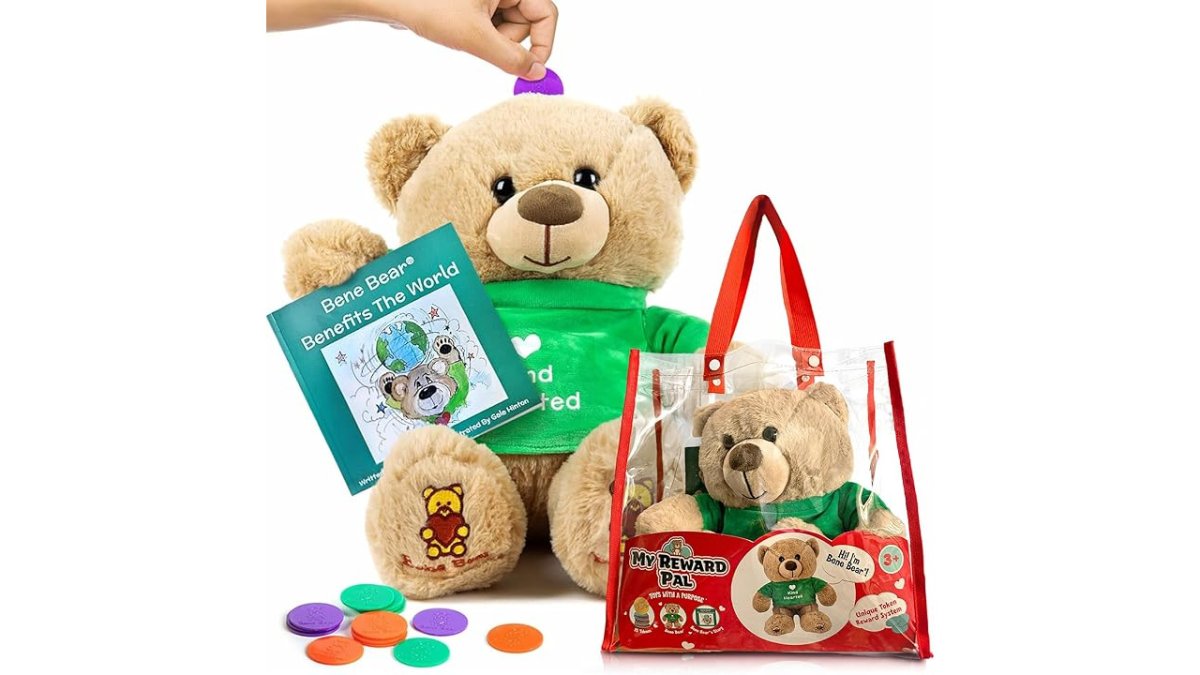
Bene World Toys builds plush companions and storybooks that make these skills part of daily life. Haylo the Horse helps children name and calm big emotions with a token pouch. Bene Bear® turns kindness and calm into a repeatable habit. Each kit supports social-emotional growth through play.
Get started with Bene World Toys and give your child a calm, comforting way to grow.