


Table of Contents
- Why Token Systems for Toddlers Work Better Than You Think
- The Core Benefits of Token Systems for Toddlers
-
Simple Token Economy Examples for Home
- Step 1: Define the Behavior in Observable Terms
- Step 2: Choose Your Token and Board
- Step 3: Set the Exchange Rate
- Step 4: Deliver Tokens Immediately and Pair with Labeled Praise
- Step 5: Run a "Practice Day" Before You Start
- A Real-World Example: The Morning Routine
- What to Do When the System Stalls
- The Backup Plan: When You Are Out and About
- How to Build Reward Systems for Kids That Actually Work
- Token System Duration and Fading: When to Step Back
-
Common Mistakes Parents Make and How to Avoid Them
- The Hidden Problem: Parental Burnout Is the Real Enemy
- Mistake #1: Designing a System That Requires Too Much Effort
- Mistake #2: Not Enlisting Other Caregivers
- Mistake #3: Using the System as a Punishment Tool
- Mistake #4: Forgetting to Plan the Exit Strategy
- Mistake #5: Ignoring Your Own Emotional State
- The 10-Minute Weekly Reset
- When to Step Back: The Fading Schedule
- Conclusion: Start Small and Stay Consistent
- Frequently Asked Questions
Last Updated: September 9, 2026
Why Token Systems for Toddlers Work Better Than You Think
Most parents have tried the sticker chart route. It works for a week, maybe two, and then the novelty fades. The core benefits of token systems for toddlers go far deeper than temporary compliance, tapping into how a young child's brain learns. A token system is a structured method of positive reinforcement where a child earns a tangible marker for a target behavior, later exchanged for a reward, teaching delayed gratification and self-regulation.
This guide breaks down how to build reward systems for kids that actually work, moving beyond clinical jargon into practical, warm strategies for your living room.
The Core Benefits of Token Systems for Toddlers
The immediate benefit is obvious: fewer power struggles. Token systems for toddlers provide predictability, which reduces anxiety. When a child knows that gentle hands lead to a token, the world feels safer and more controllable, and the visual cue of a token board makes abstract concepts like "being kind" concrete.
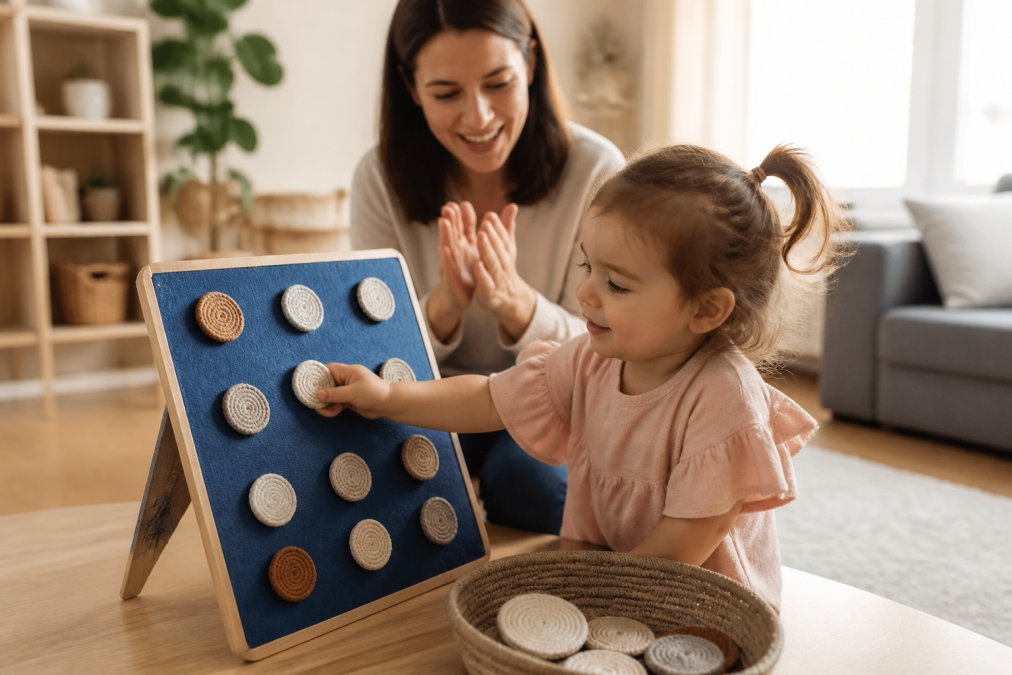
Beyond behavior modification, these systems strengthen executive function. Waiting to collect enough tokens practices delayed gratification, a skill linked to better outcomes in school (peer-reviewed research). The system also encourages skill acquisition, not just compliance, instead of forcing a child to stop a behavior, you teach a new one, like using words to request a turn instead of grabbing.
Simple Token Economy Examples for Home
You do not need a clinical kit to start, but a structured plan prevents the common failure of inconsistency. A token economy is simply the system you use to manage how tokens are earned and spent. The most effective examples for home involve a clear "if-then" contingency. Here is a framework to adapt.
Step 1: Define the Behavior in Observable Terms
Avoid vague targets like "be good." Instead, pick behaviors you can see and count. For a toddler, that means phrasing like "puts shoes on when asked" or "uses a fork for dinner." Write the behavior on the board with a simple drawing or photo. A 2-year-old cannot read, but they can match a picture of a toothbrush to the morning routine.
Step 2: Choose Your Token and Board
Common options include poker chips, glass gems, or magnetic buttons. The token needs to be safe (no choking hazards for children under 3) and distinct. The board itself should have 3 to 10 clear slots, depending on age. A simple laminated strip of paper with Velcro dots works as well as any commercial product. The key is that the child can physically place the token themselves, that act is part of the reinforcement.
Step 3: Set the Exchange Rate
For a 2-year-old, 3 tokens might equal one small reward like a sticker or 5 minutes of a preferred activity (apa.org). For a 4-year-old, 5 tokens might buy 15 minutes of tablet time or choosing the family snack. The reward menu should be posted next to the board with pictures. Offer 3 to 5 options and rotate them weekly to prevent satiation. If the child stops caring about the reward, the system loses its power.
Step 4: Deliver Tokens Immediately and Pair with Labeled Praise
The token must come within seconds of the behavior (apa.org). The connection is lost if you wait until dinner time to hand it over. Say exactly what they did right as you hand over the token: "You shared your truck with your sister. That was very kind. Here is your token." This pairing is what builds the association between the behavior and the positive feeling.
Step 5: Run a "Practice Day" Before You Start
Before officially launching the system, do one rehearsal. Walk your toddler through the entire loop: you catch them doing the target behavior, hand them a token, they place it on the board, and you both look at how many they need. This practice run prevents confusion on day one and sets the system up for early success.
A Real-World Example: The Morning Routine
Here is a concrete example parents often use. Target behavior: getting dressed without a fight. The board has 5 slots. Each morning that your child puts on their shirt, pants, and socks without yelling, they earn one token. When the board fills (after 5 successful mornings), they earn a weekend trip to the playground with a parent. This works because the behavior is specific, the token is immediate, and the reward is meaningful.
What to Do When the System Stalls
If your child stops engaging after the first week, do not abandon the system. Check the reward, the difficulty, and your consistency, parents often become lax after a few good days. Reboot with a fresh board and a new reward to reset the novelty.
The Backup Plan: When You Are Out and About
Token systems do not have to stay at home. A small magnetic board or a simple card with 5 circles can fit in a diaper bag. Use it for restaurant behavior or errands. The same rules apply: define the behavior, deliver the token immediately, and let the child place it.
By following this concrete framework, you move from a vague idea to a working system. The specificity is what separates a token economy that lasts from a sticker chart that dies by Tuesday.
How to Build Reward Systems for Kids That Actually Work
Building reward systems for kids that actually work requires more than just buying a chart. The system fails when it is too abstract or the reward is too far away. For a 3-year-old, a goal of 15 tokens might take a week, which is an eternity; for a 6-year-old, that same goal builds anticipation.
The key is matching the system to the child's developmental stage. A common mistake is making the goal too hard, if a child fails to earn a token all day, they feel defeated and give up. You want them to succeed often, especially in the beginning, rewarding small steps toward the larger goal.
| Age Group | Token Goal Size | Reward Frequency | Best Reward Type |
|---|---|---|---|
| 3-4 years | 3-5 tokens | Same day | Tangible prize or sensory activity |
| 5-6 years | 5-10 tokens | Every 2-3 days | One-on-one time with parent |
| 7-8 years | 10-15 tokens | Weekly | Privilege or small allowance |
For tangible systems that feel special, a plush companion that holds the tokens can be more engaging than a flat piece of cardboard. The Bene Bear® Kit turns this into a story-led experience where the bear is the "bank" for good choices, adding a layer of social-emotional learning.

Token System Duration and Fading: When to Step Back
A token system should be temporary. The goal is to fade the tokens out so the behavior becomes internally motivated. If you are still using the board six months later for the same behavior, you have become reliant on the crutch.
Plan for token system duration and fading from the start. Once the behavior is consistent for a few weeks, stretch the ratio, give a token every other time, then a "surprise" token at the end of the day. This unpredictability strengthens the habit. toddler development benefits.
Common Mistakes Parents Make and How to Avoid Them
Understanding the benefits of token systems for toddlers is easy; executing them without falling into traps is harder. The biggest pitfall is inconsistency, if you hand out tokens on Monday but forget on Tuesday, the system collapses.
The Hidden Problem: Parental Burnout Is the Real Enemy
Most guides focus on the child's behavior, but the system often fails because of the parent's. Maintaining it requires vigilance, consistency, and emotional energy, all in short supply after a long day. Parents start strong, see improvement, relax their effort, and the system quietly dies. The fix is to design the system for the parent's limits, not just the child's needs.
Mistake #1: Designing a System That Requires Too Much Effort
If the token board lives in a drawer, you will forget it. Make the system as low-effort as possible: keep the board on the refrigerator or kitchen wall, keep a jar of tokens next to it, and store any commercial kit in the same spot every time.
Mistake #2: Not Enlisting Other Caregivers
If you are the only one handing out tokens, the system only works when you are present. Grandparents, babysitters, and partners need to use the same language and rules. Hold a 5-minute "training" session with every caregiver and write the target behaviors on an index card for the fridge.
Mistake #3: Using the System as a Punishment Tool
Token systems are for positive reinforcement, not for taking tokens away. Frequent response cost (removing tokens) can make a child anxious and resentful. Save removal for truly dangerous behaviors only, and explain why clearly. If you are constantly deducting tokens, the system has become punitive, step back and re-examine whether the target behaviors are realistic.
Mistake #4: Forgetting to Plan the Exit Strategy
Most parents never think about how the system will end, then stop abruptly, leaving the child confused and acting out. Plan the fade from day one. Once the behavior is consistent for a few weeks, stretch the ratio, give a token every other time, then a "surprise" token at the end of the day.
Mistake #5: Ignoring Your Own Emotional State
If you are exhausted or overwhelmed, the system will fail because you will not sustain it. Build in a "parent pause": if you miss two days in a row, reboot rather than abandon. Give yourself permission to simplify, drop from 3 target behaviors to 1 if needed.
The 10-Minute Weekly Reset
To prevent burnout, schedule a 10-minute weekly check-in. Ask: Is the reward still motivating? Is the behavior still happening? Am I still handing out tokens consistently? If the answer to any is no, make one small adjustment.
When to Step Back: The Fading Schedule
A token system should be temporary, the goal is to fade the tokens out so the behavior becomes internally motivated. A typical fading schedule: weeks 1-2, token every time; weeks 3-4, token every other time; weeks 5-6, surprise token at the end of the day; week 7, no board, but a weekly celebration if the behavior held.
By addressing the parent's experience as much as the child's, you build a system that can survive contact with real life. The goal is not perfection, it is progress.
Conclusion: Start Small and Stay Consistent
The benefits of token systems for toddlers are clear, but they only materialize with consistent, gentle effort. Start with one behavior, one small reward, and a simple visual board. Watch for the small wins: the unprompted "thank you," the shared toy, the deep breath instead of a tantrum.
At Bene World Toys, we build tools that make this process joyful. Our story-led kits, like the My Reward Pal™ Collection, pair plush companions with token-based systems to help children practice kindness and emotional regulation through play. When you choose a kit that includes a magnetic tail connection and write-in pages, you are not just buying a toy; you are building a daily habit of connection. Get started with Bene World Toys and watch your child’s confidence and character grow, one token at a time.

Frequently Asked Questions
What is a good reward system for a 2-year-old?
A simple token system for a 2-year-old should focus on immediate feedback. Use a physical token board with only 3 to 5 slots. Choose one specific behavior, like picking up toys or using gentle hands. Give a token right after the behavior with verbal praise. When the board is full, offer an immediate reward like a favorite snack or 10 minutes of park time. Keep sessions short and expectations clear to match their short attention span.
How do you implement a token system without creating dependency on rewards?
The key is a fading plan. Start by giving tokens for every instance of the good behavior. After a few weeks, give tokens every other time, then randomly. Pair each token with specific praise like 'You shared your truck, that was kind.' This links the good feeling to the action, not just the token. After a month, swap the physical token for a verbal high-five or a sticker on a calendar to build intrinsic motivation.
Do token boards work for ADHD?
Yes, token boards are a common behavioral intervention for children with ADHD because they provide immediate feedback and clear structure. The visual cue of earning a token helps bridge the gap between action and reward. Use a timer to break tasks into short chunks and offer frequent token payouts to maintain focus. Consistency is critical, so keep the routine identical each day. Combine the board with a physical break after the task is complete to help with self-regulation.
Can you give me some examples of reward systems for kids?
One example is a magnetic tail board where your child earns a magnetic piece for each instance of a target behavior like brushing teeth without a fight. Another is a jar filled with pom-poms for completing chores, which is then traded for a family movie night. For younger toddlers, a simple laminated card with 5 circles that you mark with a sticker works well. Each system should include a reward menu so your child knows what they are working toward.