


Table of Contents
- Step 1: Set Up a Daily Gratitude Routine That Actually Sticks
- Step 2: Model Gratitude for Kids in Everyday Moments
- Step 3: Try Gratitude Activities for Kids That Fit Your Day
- Step 4: Use Daily Gratitude Journal Prompts for Children
- Step 5: Teach Delayed Gratification and Push Back on Entitlement
- Step 6: Adapt Gratitude Practice for Neurodivergent Kids and Hard Seasons
- Common Mistakes Parents Make When Teaching Gratitude
- Frequently Asked Questions
Last Updated: September 19, 2026
Step 1: Set Up a Daily Gratitude Routine That Actually Sticks
The best way to teach kids gratitude daily is to attach one small practice to a moment that already happens every day. A routine tied to an existing habit survives busy weeks. A routine that needs its own time slot usually does not. Integrating these brief moments of appreciation into your schedule creates a natural rhythm for staying mindful daily.
At Bene World Toys, we build our kits around this idea. Gratitude sticks when it is short, repeatable, and tied to something your family already does.
Morning, Mealtime, or Bedtime: Pick Your Anchor Point
Pick one anchor and keep it for at least a month. Consistency matters more than timing.
- Morning: One thing you are looking forward to, said out loud in the car
- Mealtime: One good thing from the day, shared before anyone leaves the table
- Bedtime: One person you want to thank, named out loud before lights out
Many families find bedtime works best. Kids are calm, the day is done, and the conversation has somewhere to land.
Step 2: Model Gratitude for Kids in Everyday Moments
Children copy what they see far more than what they are told. If you want a thankful kid, let them catch you being thankful.
Say it out loud, on purpose, in small moments:
- "I'm grateful the traffic light turned green."
- "That cashier was kind. I want to thank her."
- "I had a hard day, and I'm thankful dinner is warm."
What to Say When You're Stressed or Frustrated
This is where most parents stall. It feels fake to give thanks mid-meltdown.
Try honesty instead of cheerfulness. "I'm frustrated right now. I'm still thankful we get to figure this out together." That sentence teaches two things at once: feelings are allowed, and gratitude can live next to them.
Step 3: Try Gratitude Activities for Kids That Fit Your Day
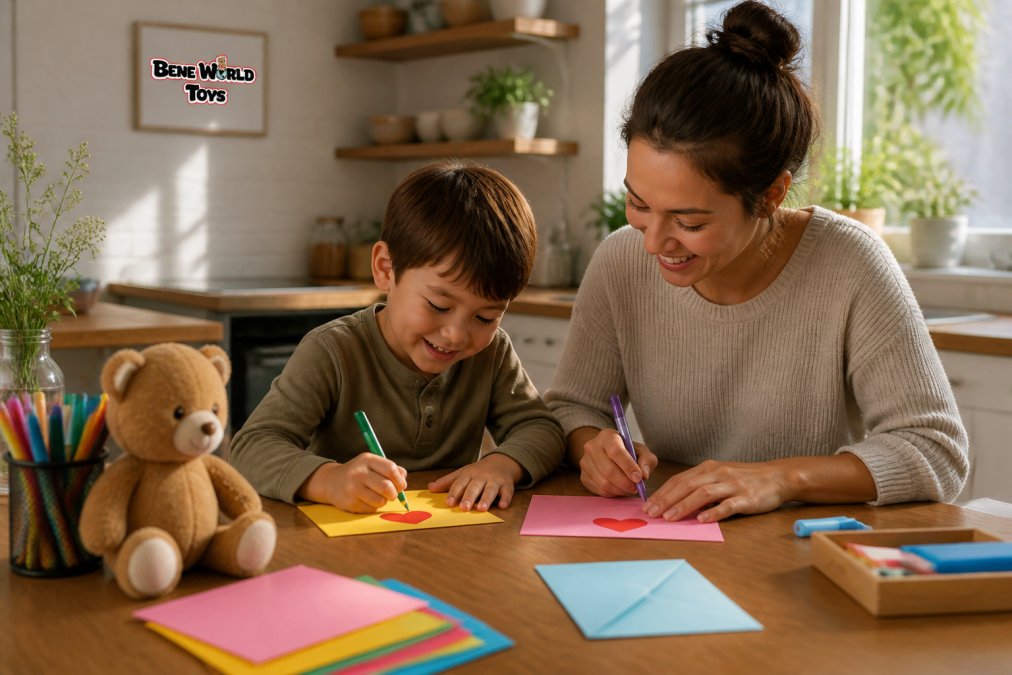
Gratitude activities for kids work best when they take less than ten minutes, need no setup, and match the child's developmental stage. A quick activity beats an elaborate craft you never get around to. The key is picking the version that fits your kid's age and wiring, not the version that looks best on a craft blog.
Age-Banded Activities With Scripts You Can Use Tonight
Ages 2-4: Sensory and naming. Kids this age understand concrete, present-tense gratitude. Skip abstract prompts. Use a script like: "Touch something soft you like. Tell me about it." Or hand them a small object and say, "What is one thing you're glad we have?" A stuffed animal or a favorite blanket works as the anchor object. The goal is naming, not reflection.
Dinner Table Round-Robin and Thank-You Note Practice
The round-robin works because it removes the open-ended question that stalls kids. Instead of "What are you thankful for?", which invites a shrug, it asks for a person and a reason. That structure is what makes it repeatable.
A Note on Neurodivergent Kids
If your child is neurodivergent, the activity itself may need to shrink before it can grow. A verbal round-robin can be replaced with a picture card the child points to. A thank-you note can become a single sticker on a card. The activity is not the point, the noticing is. Pick the smallest version your child can do without distress, and let it be enough for now.
Step 4: Use Daily Gratitude Journal Prompts for Children
Daily gratitude journal prompts for children give kids a starting point when "what are you thankful for?" gets a shrug. The prompt does the hard work.
Try these:
- Who made you smile today, and why?
- What was the best part of your lunch?
- What is something your body let you do today?
- Who helped you without being asked?
- What made you feel safe today?
Step 5: Teach Delayed Gratification and Push Back on Entitlement
Delayed gratification is the skill of waiting for something better instead of taking the quick reward. It grows slowly, and gratitude grows alongside it. The two are linked: a child who waits for something tends to notice it more when it arrives.
The Four-Step Wait-and-Notice Loop
A simple way to build the muscle:
- Name the want out loud together. "You want the new set. Say it in your own words." Naming turns a vague craving into a specific object.
- Set a short wait. A day is enough for young kids. A week is realistic for ages 8-11. A month is fair for teens. The wait should be long enough to feel, short enough to survive.
- Check in during the wait. "Still want it?" This is the step most parents skip. The check-in is where the child learns that wanting can change. Sometimes the answer is yes. Sometimes it is no. Both are useful information.
- Notice the item once it arrives. "You waited for this. How does it feel?" The noticing is what converts the wait into gratitude.
Age Calibration
A two-year-old cannot wait a week. A fourteen-year-old can wait a month. Match the wait to the child, not to the item. If the wait is too long, the child learns helplessness. If it is too short, the child learns nothing. The sweet spot is a wait the child can almost, but not quite, tolerate.
Digital Entitlement: The Instant-Gratification Problem
Screens make comparison constant. A child sees a friend's new toy before dinner and feels behind by bedtime. That feeling is not a character flaw. It is a design feature of feeds. The same feeds also deliver instant rewards, a like, a new level, a video that starts the second it loads. That instant loop is the opposite of delayed gratification.
When the Family Is in a Hard Season
During a move, a loss, a divorce, or a stretch of financial hardship, the wait-and-notice loop can feel cruel. Shrink it. One small want, one short wait, one noticing. The routine itself is comfort. Do not skip it entirely; the predictability is part of what helps.
Step 6: Adapt Gratitude Practice for Neurodivergent Kids and Hard Seasons
Gratitude practice for neurodivergent kids needs more structure and less surprise. Predictability helps. So does a visual cue.
A few adjustments that help:
- Use the same words every time. "One thank you. Then we're done."
- Offer two choices instead of an open question. "Thankful for a person or a place?"
- Let the child hold something while they answer. A plush toy gives restless hands a job.
- Skip eye contact. Side by side works better than face to face.
Digital-Age Gratitude: Screens, Comparison, and Real Connection
Screens make comparison constant. A child sees a friend's new toy before dinner and feels behind by bedtime. That feeling is not a character flaw. It is a design feature of feeds.
Common Mistakes Parents Make When Teaching Gratitude
Other common missteps:
- Correcting the answer. "You should be thankful for something better" ends the conversation.
- Using gratitude as a guilt tool. "There are kids with nothing" creates shame, not thanks.
- Saving it for big moments. Gratitude grows from small, ordinary noticing.
- Quitting after a week. Habits take longer than that to take hold.
The Bene Bear® Benefits The World Storybook gives younger kids a concrete way to see kindness, respect, and empathy in action. For a child who needs the idea made visual, a story does more than a lecture.

Frequently Asked Questions
How can I teach my child to practice gratitude?
Start with one daily anchor point, like bedtime or dinner. Ask your child to name one specific thing they appreciated that day and why. Keep it short and consistent. Model the behavior yourself by sharing what you're thankful for first. Over time, this simple routine builds the habit of noticing good things without forcing it.
What are some simple daily gratitude activities for toddlers?
Toddlers respond best to hands-on, visual activities. Try a gratitude jar where they drop in a drawn picture or sticker each night. Use plush toys or storybooks to make thankfulness concrete. Sing a thankfulness song at meals. Keep activities under five minutes and repeat the same ones daily so the routine feels safe and predictable.
How does practicing gratitude benefit a child's social-emotional development?
Gratitude practice builds empathy, self-regulation, and perspective-taking. When kids regularly notice what others do for them, they become more likely to show kindness and less likely to feel entitled. Research in positive psychology links gratitude to better emotional resilience and stronger relationships. These skills carry into school, friendships, and family life.
How to teach an ungrateful child to be grateful?
Avoid shaming or lecturing. Instead, increase opportunities for your child to give, not just receive. Volunteer together, write thank-you notes, and practice delayed gratification by waiting before purchases. Use gentle reinforcement when they express appreciation. Consistency matters more than intensity. Small daily moments shift perspective over weeks, not days.
Teaching kids gratitude daily is less about big conversations and more about small, repeated moments. Bene World Toys builds plush kits and storybooks that make those moments easy to repeat, with a token system that rewards the behaviors you are working on and write-in pages that spark real conversation. Shop now and give your family a routine that turns thankfulness into a daily habit.