


Quick Summary
A calm down corner is a small, quiet area where a toddler can go to settle big feelings. It should be a spot away from main traffic, with soft seating, a few comforting objects, and visual cues, and it should be visible to an adult. Keep the purpose simple: it is for feelings, not punishment.
- Choose a quiet spot away from the main traffic path and out of direct sightlines from the door.
- Use soft floor seating and a thick rug, keeping cushions low so toddlers can climb on and off alone.
- Start with two or three objects, such as a cushion and one book, and add more only if the child uses them.
- Run every item through a toilet-paper tube test and remove loose beads, buttons, cords and loops.
- Offer the corner without pressure, go sit there yourself, and try again later if a toddler refuses.
Table of Contents
- What a Calm Down Corner Is and Why Toddlers Need One
- Choosing a Quiet Spot at Home or in the Classroom
- Cozy Seating, Soft Rugs, and Pillows for Little Bodies
- DIY Calm Down Corner Ideas for Toddlers on a Budget
- Calm Down Corner Printables and Visual Cues
- Calm Down Activities for Toddlers, with Teaching Scripts
- What to Do When a Toddler Refuses or Misuses the Space
- Setting Up Your Calm Down Corner at Home Today
- Frequently Asked Questions
What a Calm Down Corner Is and Why Toddlers Need One
A calm down corner is a small, quiet area where a child can go to settle big feelings. For a deeper look at teaching emotional regulation to autistic children, this guide covers the approach in more detail. It is not a time-out spot.
Toddlers have not yet learned how to manage frustration on their own. A dedicated space gives them a predictable place to practice calming, which builds self-regulation over time. Think of it as a rehearsal room for emotional skills.
Keep the purpose simple: the corner is for feelings, not punishment. Describe it to your child as "our calm place," and visit it together when everyone is happy first.
Choosing a Quiet Spot at Home or in the Classroom
Pick a spot away from the main traffic path, such as a corner of a bedroom, a nook under a window, or a low-traffic area of a playroom. Good choices are out of direct sightlines from the kitchen or the front door, so the space feels private.
In a classroom, the corner works best near a quiet wall and away from the block center or the door. Teachers often use a shelf or low divider to create a sense of enclosure without blocking supervision.
Consider these practical points:
- Keep the area within easy sight of an adult for safety.
- Use soft lighting or a lamp rather than harsh overhead light.
- Make sure the child can get in and out without help.
Cozy Seating, Soft Rugs, and Pillows for Little Bodies
Soft seating is the foundation of a calm space. A floor cushion, a small bean bag, or a folded quilt on a thick rug gives a toddler a place to sit low and feel grounded.
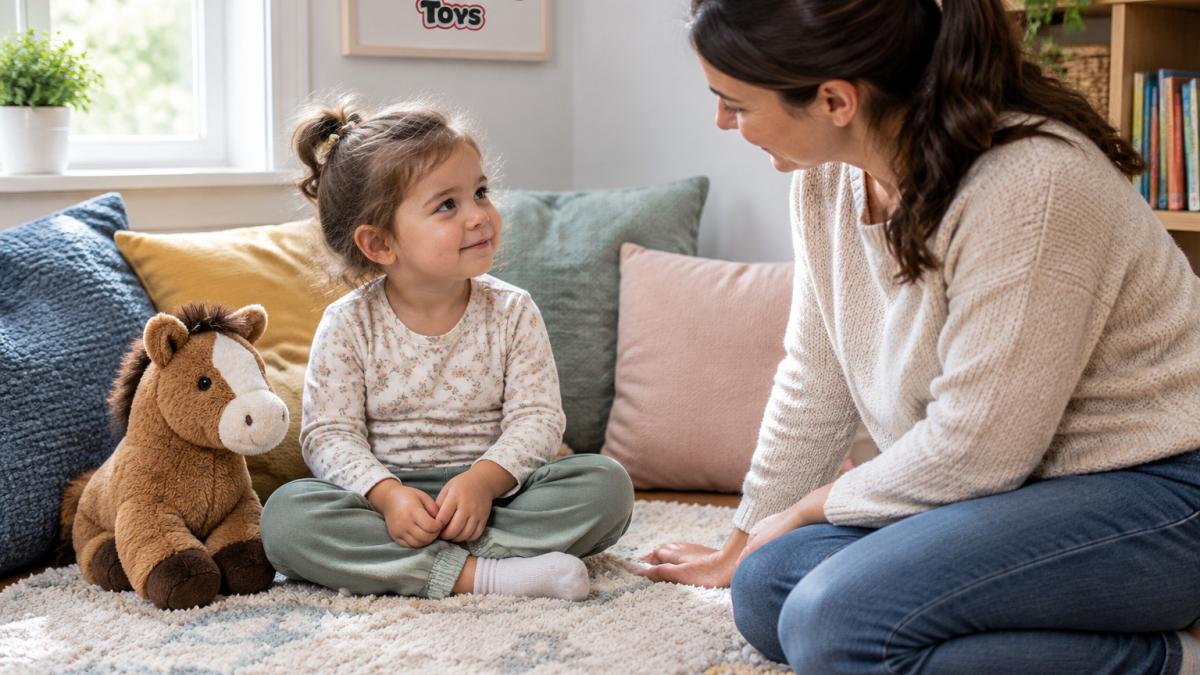
Pillows and blankets add comfort, but avoid anything that could bunch up near the face or come apart in small hands. Browse sensory-friendly plush toys for emotional regulation designed with these safety needs in mind.
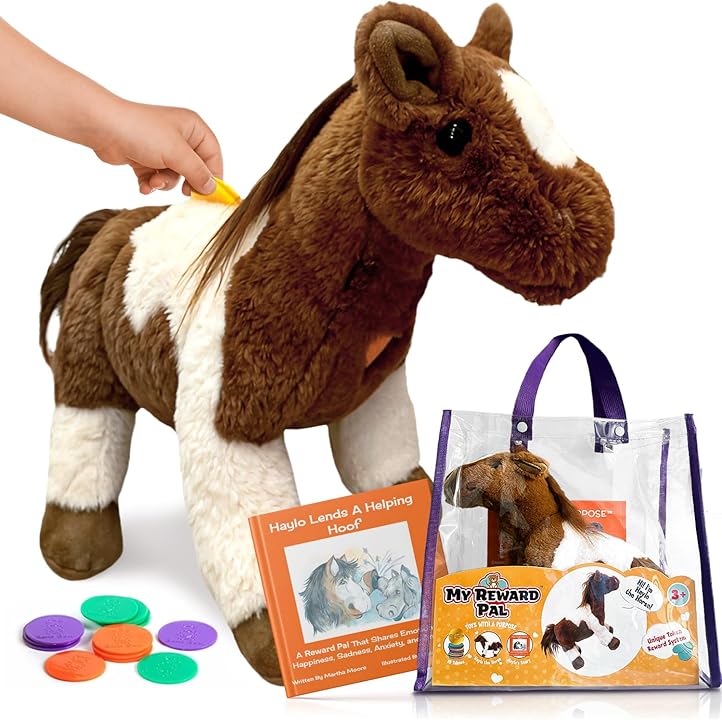
A plush companion in the corner adds comfort too. Haylo the Horse, a plush companion for ages 3 to 6, can sit beside a child during hard moments, and its token pouch offers a gentle reason to return to the space after calming down.
DIY Calm Down Corner Ideas for Toddlers on a Budget
A calm down corner does not need new furniture or a shopping trip. Most families already own the core pieces.
Start with the essentials and substitute freely:
| Item | What it does | Low-cost or homemade substitute |
|---|---|---|
| Floor seating | Gives a low, grounded place to sit | Folded quilt or bath towel over a couch cushion; a laundry basket turned on its side with a blanket inside |
| Soft surface | Warms the floor and defines the space | Foam play mat, thick bath mat, or an old yoga mat under a blanket |
| Calming book | Gives words for feelings | Library picture book about emotions; a photo album of family faces |
| Sensory object | Gives hands something to do | Stress ball, a fabric bag of dry rice sealed with strong stitching, or a smooth wooden spoon |
| Visual timer | Makes the visit predictable | Phone timer with a soft chime, or a small sand timer |
| Comfort object | Provides connection | A stuffed animal from home, or a small pillow with the child's name |
A common pattern is that two items work better than six. A cushion and one book are often enough. Add a third object only after you notice your child using the first two.
Safety screening matters more than price. Before anything goes in the corner, check it against these points:
- No object fits through a cardboard toilet-paper tube. That is the standard choking-hazard test used for toddlers.
- No loose beads, buttons, bells, or small detachable parts. Sew or tape anything that could come free.
- No cords, loops, or long straps. Curtain cords and drawstrings are strangulation risks and do not belong near a toddler's quiet space.
- No weighted blankets or heavy lap pads unless a therapist or pediatrician has recommended them for your child. Weighted items are not a general toddler tool.
- No glass, ceramic, or thin plastic that can shatter or crack.
- Keep the space within sight of an adult. A calm corner is not a place for unsupervised time.
Watch out: a fabric bag of rice or beans is only safe if the seams are double-stitched and the bag is too large to fit in a mouth. Check it after every use for tears.
A few low-cost touches make the space feel intentional without spending much:
- A small framed photo of the family at eye level.
- A laminated feelings card taped to the wall.
- A soft lamp or a battery-powered puck light instead of overhead lighting.
- A small basket to hold the objects, so the corner stays tidy and the child can put things back.
Skip snacks, screen time, and toys with batteries. Those turn the corner into a reward zone and undercut its purpose. The corner should feel calm, not exciting.
Calm Down Corner Printables and Visual Cues
Visual cues help toddlers who do not yet have words for their feelings. A simple chart with faces showing happy, frustrated, sad, and calm gives your child a way to point rather than explain.
Print a few laminated cards and post them at the child's eye level. Useful cues include:
- A feelings chart with simple face drawings
- Three step cards: "Stop, breathe, choose"
- A "my calm place" sign with a picture of the corner
Keep the printables simple and few. Too many images make the space feel busy. Change them as your child grows, adding more feeling words as they learn them.
Calm Down Activities for Toddlers, with Teaching Scripts
Activities give a child something to do with calm hands and a settling body. You can also explore a collection of emotional regulation activities for children.
Deep breathing with a stuffed animal: Have your child place a plush on their belly and breathe in while it rises, then out while it falls.
Naming the feeling: Point to the feelings chart together. Script: "Your face looks frustrated. Can you show me frustrated? That's okay. Let's take a breath together."
Sensory squeeze: Hand your child a stress ball or soft fabric bag. Script: "Squeeze tight, one, two, three.
Story time: Read a short book about feelings, pausing to ask what the character feels.
Use the same scripts each time. For more guidance, see how to teach emotional regulation to toddlers.
What to Do When a Toddler Refuses or Misuses the Space
Refusal is normal, especially in the first few weeks. A toddler who will not go to the corner is not failing. The space is new, and the child may not yet connect it to feeling better.
Try these steps in order:
- Offer, do not order. Say, "The calm place is open if you want it." Then wait.
- Go yourself. Sit in the corner, breathe slowly, and pick up a book. Toddlers copy what they see far more than what they hear.
- Bring one object to the child. Hand them the stress ball or the comfort plush where they are. The corner can come to them first.
- Stay nearby. If the child will sit but not alone, sit beside them. Proximity is part of the support.
- Try again later. A refused invitation today often becomes a chosen visit next week.
A short script helps when words are hard to find in the moment:
- "Your body looks like it has big feelings. The calm place is ready when you are."
- "I am going to sit in the calm place for a minute. You can join me or keep playing."
- "You do not have to go. I will stay right here."
Misuse looks different from refusal. A child may throw the cushion, pull the printables off the wall, or hide in the corner for a long time. Each has a practical response:
- Throwing: remove the thrown object calmly and say, "The cushion is for sitting. We can try again later." Keep the corner open but reduce the objects to one.
- Tearing printables: laminate the cards and tape them high enough that they are visible but not reachable. Replace paper with a small photo book.
- Hiding for long periods: check in every few minutes. Say, "I am here. Tell me when you are ready." Do not drag the child out, but do not leave a toddler alone and out of sight.
- Using the corner to avoid a task: redirect once the body is calm. Say, "Your body looks calmer. Let's go back to the blocks together."
Sensory preferences change how a child uses the space. A toddler who seeks movement may need a rocking chair, a small exercise ball to roll on, or a push against the wall.
Watch out: if a child consistently hides, screams, or escalates when directed to the corner, stop directing them there. A corner that feels like punishment will not teach regulation.
Give the routine several weeks. Consistency, a calm adult voice, and a space that fits the child's sensory needs matter more than a perfect setup.
Setting Up Your Calm Down Corner at Home Today
Start small this week. Choose one spot, add one cushion, and introduce it during a calm moment. Explain the purpose, practice a breathing script together, and let your child return to the corner on their own terms.
Once the routine feels natural, add one tool at a time. The Friendship Tails Kit, featuring Pyro and Uniglo, and Brave Tails: Gracey and Louey each pair a story with a plush companion and magnetic tails that a child can connect after showing friendship or courage.
Ready to build your space? Explore Bene World Toys and find the companion that fits your child's next step.
Frequently Asked Questions
What to put in a toddler calm down corner?
Start with a soft rug or floor mat, one or two cushions, a small basket of books, and a few sensory items such as a squishy ball or a glitter tube. Keep the corner uncluttered so the child can focus. Add one comfort object, like a plush toy from Bene World Toys, that the child can hold while settling. Rotate the sensory items every week or two so the corner stays interesting without becoming overwhelming for a toddler.
How do I introduce a calm down corner without making it feel like a punishment?
Present the corner as a place the child can choose when feelings get big, not a place they are sent. Sit with your toddler in the space during calm moments, read a book together, and show them how to use the items. Use the same simple phrase each time, such as 'Let's go to your calm spot.' Avoid using the corner as a timeout, because that association makes children resist it. Praise them afterward for choosing the space.
How long should a toddler spend in a calm down corner?
There is no fixed rule, but most toddlers settle within a few minutes once they feel safe. Stay nearby, keep your voice low, and let the child leave when they feel ready. If they stay in the corner a long time without calming, offer a hug or a breathing game and check whether they are tired or hungry. Sessions should end on a positive note, with the child coming out calmer rather than being pulled out.
What calming tools are safe for toddlers to use?
Choose items without small parts that can be swallowed, and supervise use at all times. Good options include soft plush companions, large, durable squishy toys, and board books with sturdy pages. Check each item for loose seams or detachable pieces before placing it in the corner. Bene World Toys' Haylo the Horse, priced at $34.99, is a plush companion designed for children ages 3 to 6 that pairs comfort with a simple token routine.