


Last Updated: November 20, 2026
Quick Summary
Creative alternatives to tablets for long car rides include activity bags with plush toys, activity books, and small tactile items for younger kids, plus games like I Spy and story chain for older ones. Matching each activity to a child's developmental stage keeps car rides calm. Pair this with a timed rotation and rest stops for a smooth trip.
- Pack quiet, low-mess activities in a zipped pouch that stays out of reach while driving.
- Rotate two or three activities at a time so each one still feels new.
- Plan roughly 20 to 30 minutes per activity on a two- to three-hour drive, with a rest stop in the middle.
- Keep loose items out of reach during driving because they can become projectiles in a sudden stop.
- Pair an older child with a younger one for games so the older child leads and the younger one participates.
Table of Contents
- Why Screen-Free Car Time Works Better Than You Expect
- Screen-Free Road Trip Activities for Kids by Age
- Road Trip Games for Families Everyone Can Join
- Things to Do on a Long Car Ride Without Electronics: Quiet and Low-Mess Options
- Building a Trip-Length Activity Plan and Car Safety Basics
- Bring a Story-Led Kit on Your Next Drive
- Frequently Asked Questions
Why Screen-Free Car Time Works Better Than You Expect
Long drives don't have to mean a tablet on the headrest. A small bag of well-chosen activities can turn restless back-seat time into something calm, connected, and even enjoyable.
Screen-free play gives children a chance to practice patience, turn-taking, and conversation. It also gives adults a chance to talk with their kids instead of competing with a screen.
Preparation matters most. Most car-time struggles start when a child is bored with nothing to reach for. A short list of activities, packed in a carry-on bag, solves that problem before it starts.
Screen-Free Road Trip Activities for Kids by Age
Age changes what works in the back seat, and the difference is bigger than most parents expect. A toddler needs simple, low-mess items that hold attention for a few minutes at a time. A preschooler can follow a two-step game. A school-age child can sustain a project or a chapter book. A tween wants choice and a little autonomy.
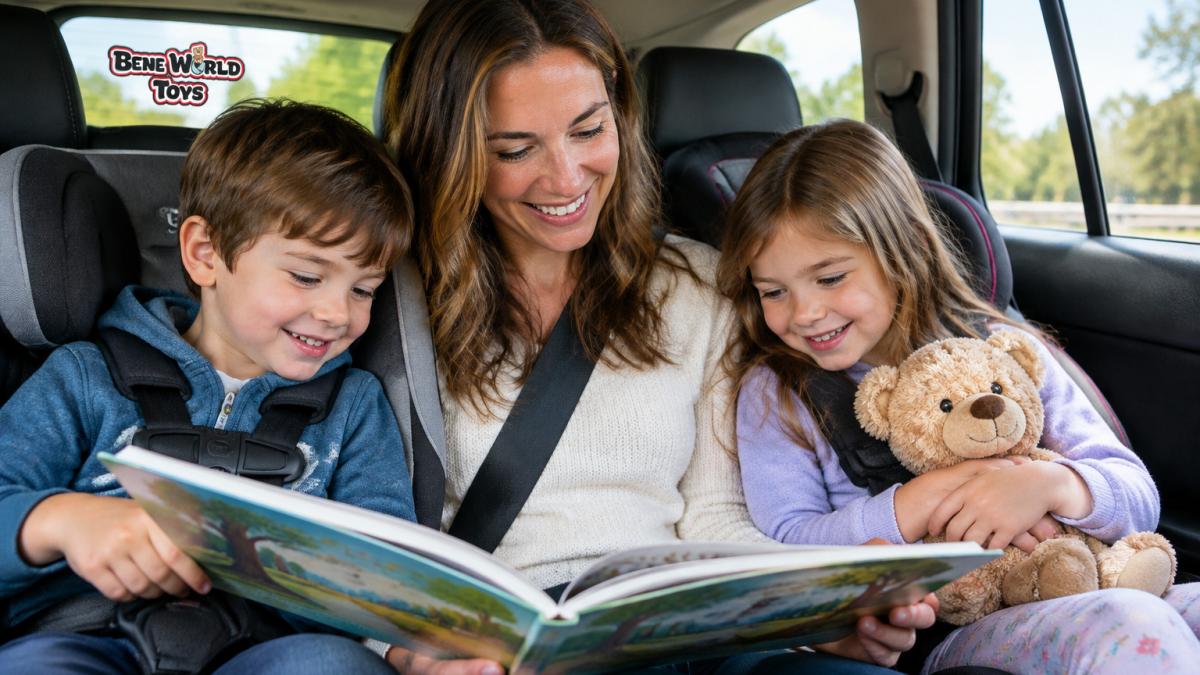
Activities for Long Car Rides for Toddlers (About 1 to 3)
Toddlers do best with short, repeatable activities and familiar objects. Plush companions, board books, and simple stacking or nesting items keep little hands busy without much mess. Rotate two or three items at a time so each one still feels new, and expect to repeat favorites many times.
Storytelling works well at this age too. A parent reading a short picture book aloud, pointing at familiar objects, builds vocabulary and gives everyone a calm moment. Keep sessions brief.
Watch out: avoid small parts, loose beads, and anything that can be pulled apart into pieces a toddler could mouth, since these are choking hazards.
Preschool and Early Elementary (About 4 to 7)
This is the sweet spot for simple games and hands-on play. Preschoolers can follow two-step directions, take turns, and enjoy being the center of attention for a round. Good choices include magnetic drawing boards, reusable sticker books, lacing cards, and small felt or magnetic play sets that stay contained.
Games work best when rules are short. "I Spy" with colors instead of letters, a story chain where each person adds one sentence, and counting games (how many red cars, how many bridges) all fit this stage. Audio stories and sing-along albums suit kids who like to imagine scenes while watching the window.
Older Kids and Tweens (About 8 to 12)
Older children can handle longer projects and more complex rules. Activity books, drawing pads, simple craft kits, and puzzle books fill an hour easily. Audio stories, podcasts, and chapter books suit kids who enjoy sustained attention. Tweens often respond best to choice, so let them pick the next activity from a short list so they feel in control of the trip.
Tweens also enjoy roles. Put them in charge of the trip playlist, the snack schedule, or the rest-stop map. A sense of responsibility keeps them engaged without a screen.
Adapting for Mixed Ages and Sibling Differences
Most cars carry more than one developmental stage at once, and that is where disputes start. A few patterns help:
- Pair an older child with a younger one for games like story chain or I Spy, so the older child leads and the younger one participates.
- Give each child their own activity bag so no one has to share a favorite item mid-drive.
- Set a turn-taking rule before departure, such as "youngest picks first, then we rotate," so the order is decided before anyone is tired.
- Keep one shared activity (an audio story or a family game) for moments when everyone needs to reset together.
A common pattern is that the child who is bored first is often the one whose activity was too easy or too hard for their stage. Adjusting by developmental fit, not by age alone, solves more back-seat conflicts than adding more toys.
Road Trip Games for Families Everyone Can Join
Games that include the whole car work best when no one feels left out. Simple rules and quick rounds keep energy high across different ages.
Try a few of these:
- I Spy with a twist: Players spot objects in the scenery, and younger children can choose colors instead of letters.
- Story chain: Each person adds one sentence to a story, passing the turn around the car.
- Would You Rather: Ask silly or thoughtful questions and let everyone answer.
Family conversation is a game in itself. Asking "What was the best part of your day?" invites real talk without a screen in sight. Our anchor words help you choose social emotional books to read together in the car.
Things to Do on a Long Car Ride Without Electronics: Quiet and Low-Mess Options
Quiet, low-mess activities protect both your sanity and your car's interior. Look for items with small parts that stay in a zipped pouch and don't require a flat surface.
Good choices include:
- Plush toys with a few simple tasks, such as matching shapes or counting
- Activity books with stickers that peel and reposition
- Figurines and small tactile toys for quiet play
- Snack packs for mid-drive energy shifts
Window watching deserves a spot too. Ask kids to count bridges, spot animals, or notice how the scenery changes. It requires no packing and keeps attention on the world outside.
The article suggests quiet, low-mess options that suit a car, and the table below sets out each one with its best use.
| Option | Best for | Key feature |
|---|---|---|
| Plush toys | Simple tasks | Matching shapes or counting |
| Activity books | Quiet play | Stickers that peel and reposition |
| Figurines and small tactile toys | Quiet play | Small and tactile |
| Snack packs | Mid-drive energy shifts | Fills a mid-drive energy dip |
Building a Trip-Length Activity Plan and Car Safety Basics
A simple plan prevents the mid-trip scramble and the "we used everything in the first hour" problem. The trick is to pace activities by trip length and to build in rest stops before anyone melts down.
A Timed Rotation by Trip Length
For a short drive of under an hour, two or three activities usually suffice: one quiet hands-on item, one game, and one audio option as a backup.
For a two- to three-hour drive, plan a rotation of about 20 to 30 minutes per activity, with a rest stop in the middle. A workable sequence: a quiet activity, a family game, an audio story, a rest stop with movement, then a second quiet activity.
For a four-hour drive, plan two rotations with a longer meal and movement break at the halfway point. Alternate high-energy games with low-energy quiet activities so the car does not stay at one intensity for too long.
For a full-day or eight-hour drive, plan three or four rotations, with a real stop every two to three hours. Save the most novel activity (a new book, a new game, a story-led kit) for the last stretch, when attention is thinnest. A common pattern is that the final hour is the hardest, so keep one option in reserve.
Car-Seat Safety and Choking or Projectile Risks
Safety comes first, and it is the part most activity lists skip. Keep loose items out of reach during driving, since small pieces and hard objects can become projectiles in a sudden stop.
Watch out: avoid activities that require reaching, leaning, or unbuckling, and never let a child undo a harness to retrieve a dropped item. Choose items that can be used while buckled and seated, and keep a small parent-accessible pouch for anything that falls.
Check that children stay buckled and seated safely, and pause activities that require reaching or leaning. For younger children, follow the car-seat guidance from the National Highway Traffic Safety Administration (NHTSA) on rear-facing, forward-facing, and booster stages.
Motion Sickness and Sensory Needs
Plan for motion sickness too. Kids who feel queasy do better with fresh air, a view of the horizon, and quiet activities rather than reading or close-up drawing. Activities that do not require looking down, such as audio stories, singing, or window-watching games, are safer for queasy riders. Keep a small bag and wipes within reach, and schedule breaks before symptoms build.
Sensory needs matter as well. Some children are calmed by a soft plush or a weighted lap item, while others are overwhelmed by too much choice. Offer one activity at a time, keep the car volume low, and let the child opt out of a game without a power struggle.
Low-Cost and No-Purchase Options
You do not need to buy travel toys to make this work. Household items, printables, and free activities cover most of the plan:
- Household: a deck of cards, a small notebook and pencil, a magnetic drawing board, a reusable sticker sheet, a small pouch of figurines already at home.
- Printable: scavenger hunts, license-plate games, road-trip bingo, and coloring pages printed before departure.
- Free: window-watching games, story chain, I Spy, counting games, and family conversation prompts.
A mix of free and purchased options keeps the bag fresh without overspending, and it lets you save the story-led kit for the moment it will matter most.
Bring a Story-Led Kit on Your Next Drive
A story-led kit gives children something to hold, talk about, and return to. Anchor words lead to ready-made social emotional learning kits, which bundle a story with a plush companion for the trip.
Our Friendship Tails Kit pairs Pyro the dragon and Uniglo the unicorn with a playful story about kindness, inclusion, and taking turns.
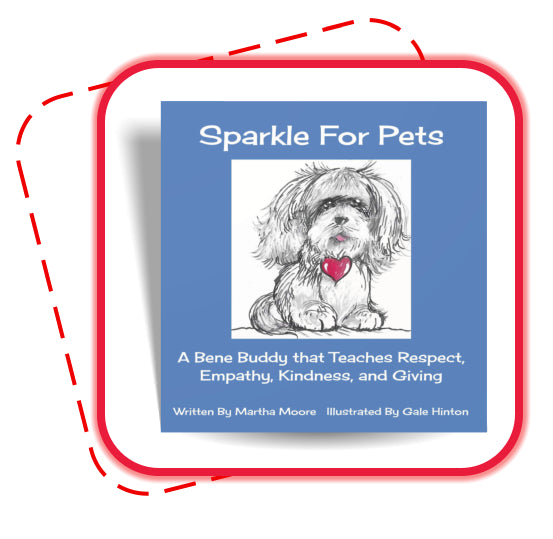
For a book-only option, the Sparkle the Rescue Dog® Storybook teaches respect and kindness toward animals and is priced at $6.99. It pairs with a separate Sparkle the Rescue Dog™ Kit if you want the reward tokens too.
Start small, pack one kit, and see what your children reach for first.
Frequently Asked Questions
What to do on a long car ride without electronics?
Start with activities that need only hands and imagination: storytelling, a simple spotting game, or a small activity bag with a coloring book and washable markers. Rotate items every hour or so so nothing feels old. Quiet, low-mess choices like sticker books or a plush companion work well in a car seat. Plan a stop every hour or two so kids can stretch, run around, and reset before the next stretch of driving.
What are some screen-free activities for a long car ride?
Good options include 20 Questions, I Spy, storytelling where each person adds one sentence, and book time with a picture book or activity workbook. Audio stories or familiar songs are also screen-free. Pack a snack bag so kids have something to do with their hands. Keep the activity bag within reach of the child so they can choose their own activity.
How do you keep a toddler entertained on a long car ride?
Toddlers do best with short, simple activities they can repeat: a board book, a soft plush toy, or a tactile item they can hold. Pack small snacks in a separate container so they have something to do. Build in regular breaks for movement. Sing songs, name colors you see outside, and point out animals or vehicles. Keep the activity bag low-mess so it stays manageable in a car seat.
How can families make a long car ride feel shorter without screens?
Break the trip into segments and mark each one with a small activity or snack. Use road trip games for families, such as a scavenger hunt for license plates or landmarks, so everyone is involved. Plan rest stops for fresh air and movement. Taking turns choosing the next activity gives older kids a sense of control and keeps the whole car engaged.