


Last Updated: November 21, 2026
Positive Reinforcement Examples for Shy Children at Home
**1.

2. Use a quiet, low-key reward. A thumbs-up or whispered "I noticed that" lands better than loud cheering.
**3. See our token systems for toddlers benefits guide.
4. Praise effort over the result. "You practiced your greeting three times before the party" rewards the work, not the outcome.
**5.
6. Let the child lead the play. Child-led activity gives a shy child control, and control lowers the stakes.
7. Move from charts to internal motivation. Our guide on moving kids from reward charts to intrinsic motivation explains how to fade the tokens as confidence grows.
Positive Reinforcement Examples for Shy Children in School
**1.
**2.
3. Partner work before group work. Pair the child with one friendly classmate first, then widen the circle.
4. Structured turn-taking games. Turn-taking gives a shy child a script and a predictable role.
5. A class job that requires one small interaction. Handing out supplies means brief, low-stakes greetings.
**6.
**7. For classroom-specific strategies, see our social emotional learning for classroom teachers resource.
| Example | Best Age Range | Setting | Why It Works for Shy Kids |
|---|---|---|---|
| Private verbal praise | Ages 3-8 | Any | Avoids public attention |
| Secret signal | Ages 4-8 | Classroom | Reinforces quietly |
| Partner work first | Ages 4-8 | Classroom | One familiar face |
How to Help a Shy Child Socialize and Gain Confidence
Shyness is a temperament, not a flaw, and it is not the same as social anxiety.
Step 4: Model the behavior. Let your child watch you greet people warmly and recover from awkward moments.
Step 5: Reinforce each attempt, not just the success. "You walked over to the group. That took courage."
Step 6: Build emotional language. Naming feelings helps a shy child manage them. Our guide on teaching emotional intelligence at home gives you the language to start with.
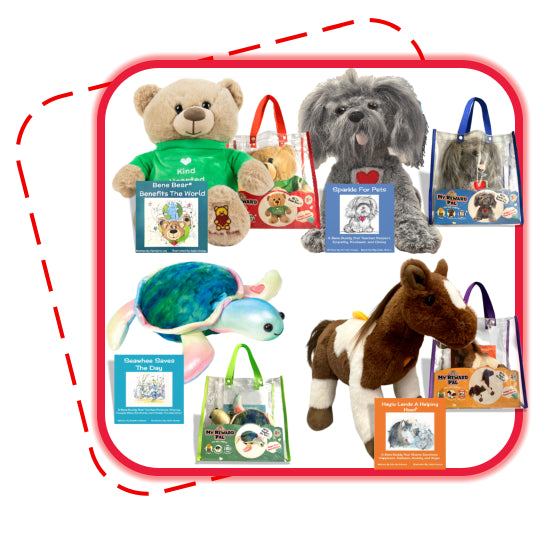
Step 7: Add a tangible ritual. Our My Reward Pal™ Collection pairs a story with a plush and a token system, so a child can mark each brave step and connect the magnetic tails when they do something hard while scared.
Watch out: reinforcing only compliance teaches a child to please adults rather than trust their own judgment.
Building social confidence in a shy child is slow work, and it goes faster when the reinforcement is consistent, specific, and gentle. Get started with Bene World Toys and give the shy child in your life a way to practice courage one small step at a time.