


Table of Contents
- Why Screen-Free Toys Matter for Focus and Emotional Growth
- Toys That Help Kids Focus Through Tactile Learning
- Fidget Toys for Focus: Beyond Distraction to Concentration
- Frequently Asked Questions
Last Updated: October 11, 2026
Why Screen-Free Toys Matter for Focus and Emotional Growth
Screen-free toys for focus help children develop concentration skills without digital overstimulation. At Bene World Toys, we understand parents need tools that teach kids to settle their minds and build emotional resilience.
Most toys entertain passively for minutes. Screen-free toys for focus engage hands, mind, and emotions simultaneously, the combination that builds real concentration.
Tactile play activates different neural pathways than screen time, building the neural infrastructure for sustained attention.
Toys That Help Kids Focus Through Tactile Learning
Tactile toys teach focus by giving children something meaningful to hold. Plush companions with magnetic connections, weighted elements, or textured surfaces demand gentle attention and require children to slow down and engage.
The best tactile toys combine comfort with purpose, helping children practice staying present while holding a soft toy during stories or emotional moments.
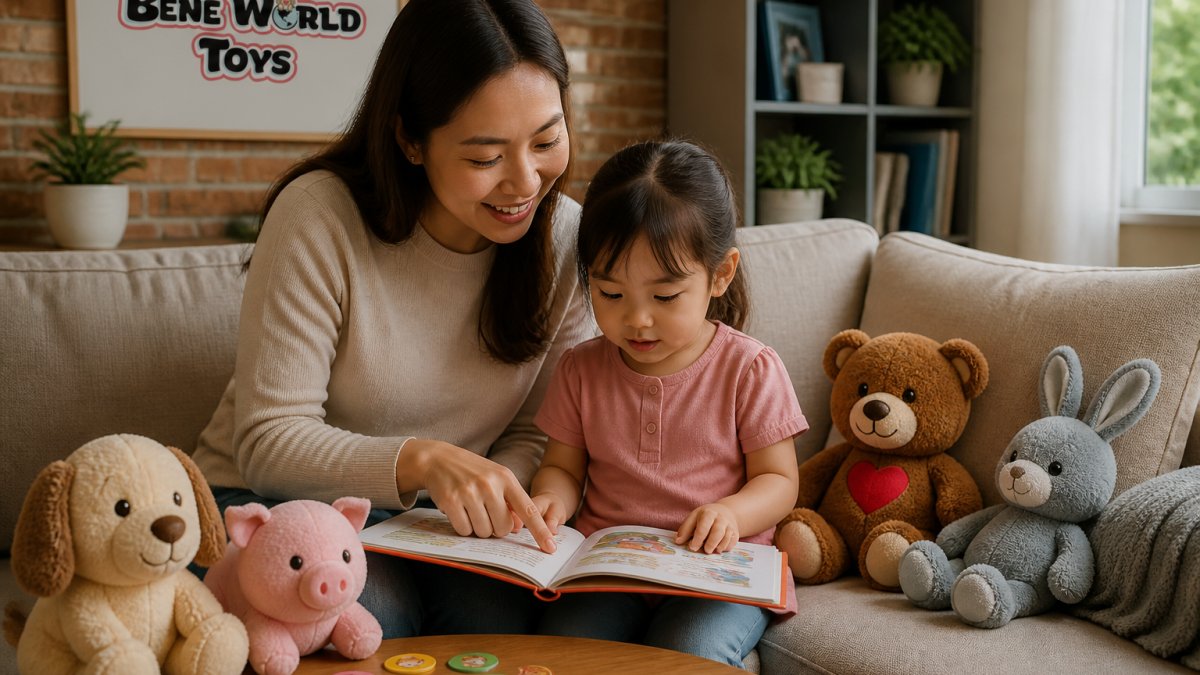
Storybooks paired with tactile toys deepen focus further. When a child holds a plush character while hearing its story, the narrative becomes personal. The toy becomes an anchor for attention. This is why kits that combine storytelling with tactile elements outperform toys alone.
Fidget Toys for Focus: Beyond Distraction to Concentration
Fidget toys for focus aren't meant to distract, they're meant to channel restless energy into productive concentration. The difference matters. A toy that lets a child wiggle while listening actually improves focus for many kids, especially those who struggle to sit still.
The mechanism is simple. Some children's brains need movement to think clearly. Giving them a fidget toy removes the barrier to focus. They stop fidgeting with their clothes or squirming in their seat. Instead, their hands have work, and their mind settles.
Quality fidget toys for focus have specific design elements: smooth surfaces, satisfying resistance, and purposeful motion. Magnetic connections, rotating elements, or soft textures all serve this function. The toy should feel intentional, not random.
Helping your child develop focus is one of the most valuable gifts you can offer. Screen-free toys for focus create the foundation for this skill by making concentration feel natural and rewarding. Start with one quality toy paired with a story, observe how your child responds, and build from there. At Bene World Toys, we've designed our kits to do exactly this, turning focus into a daily practice that strengthens emotional growth alongside concentration. Explore our collection and discover how the right toy can transform your child's ability to settle, listen, and learn.
Frequently Asked Questions
What makes screen-free toys for focus different from regular toys?
Screen-free toys for focus are designed with intentional features that help children practice concentration, emotional regulation, and mindfulness. Unlike passive toys, they engage children's hands and minds through tactile interaction, storytelling, and reward systems. Token-based systems, for example, make positive behavior repeatable by giving children tangible feedback. This approach builds lasting habits around kindness, gratitude, and emotional awareness, skills that transfer to school, home, and relationships.
Are fidget toys for focus actually effective for improving concentration?
Fidget toys for focus work best when they serve a specific purpose rather than distract. For children who need movement to concentrate, fidget tools provide a healthy outlet that channels restless energy. The key is matching the toy to your child's sensory needs. Some children focus better with tactile input like magnetic connections or soft textures, while others benefit from gentle repetitive motion. Pairing fidget tools with structured activities, like reading a story or practicing gratitude, increases their effectiveness for building attention span.
How do I know if a focus toy will work for my child with sensory sensitivities?
Start by observing what textures and movements your child gravitates toward. Children with autism or sensory processing differences often respond well to toys with predictable textures, controlled movement, and minimal overwhelming stimuli. Plush toys with magnetic connections, soft materials, and gentle interaction patterns tend to be calming rather than overstimulating. Test the toy in short sessions first, and pair it with quiet time or one-on-one connection. Many children with sensory needs actually thrive with structured, intentional tools because they provide safe, predictable ways to self-regulate.